
Skip to content

2026 Best XGS PON OLT for Global Buyers

The 2026 market for Xgs-Pon Olt equipment is becoming more demanding. Global buyers now expect higher capacity, cleaner management, and dependable long-term support. Speed alone is not enough. A powerful chassis can still disappoint when firmware, optics, or field service are weak.

Dr. Glen Kramer, a recognized PON engineer, offers a practical reminder: “Capacity is useful only when the network can deliver it consistently.” This principle matters when comparing OLT platforms for residential broadband, business access, campuses, and regional operators. Buyers should examine port density, downstream and upstream performance, combo-PON support, optical budgets, and subscriber scalability. They should also verify interoperability with ONUs, monitoring systems, authentication platforms, and existing fiber infrastructure.

Real deployment details often decide the result. A compact 1U Xgs-Pon Olt may suit a city cabinet with limited power. A larger chassis may fit national networks requiring redundancy and expansion. Cloud management can simplify operations, but local control remains valuable during outages. Security updates, API quality, warranty terms, and technical training deserve equal attention.

No shortlist is perfect. Vendor specifications may look impressive, yet field conditions can expose hidden limitations. Regional certification, shipping reliability, and replacement procedures also vary. This guide compares leading 2026 options through a buyer-focused lens, using practical network requirements rather than marketing claims. It aims to help global purchasers ask sharper questions before signing an order. Some conclusions may change as standards and supplier strategies evolve. That uncertainty should be acknowledged, not hidden.
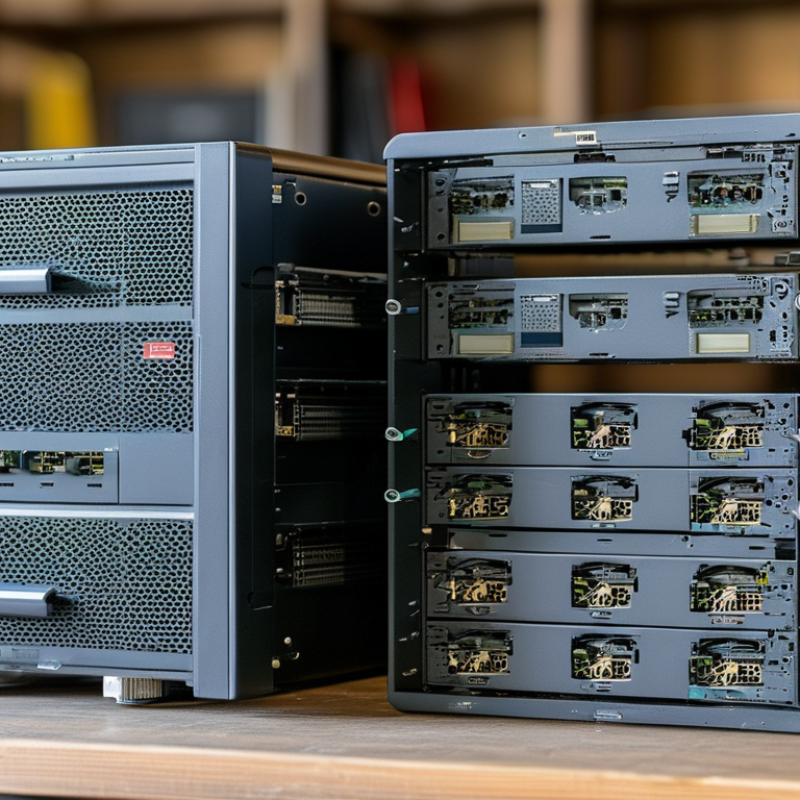
2026 Best XGS PON OLT for Global Buyers

What Is XGS-PON OLT Technology?

What Is XGS-PON OLT Technology?

XGS-PON is a fiber access technology designed for symmetrical 10 Gbps upstream and downstream transmission. The OLT, installed in a network center, manages optical signals for many customer-side ONUs or ONTs. It controls bandwidth, authentication, service profiles, and traffic scheduling across the passive fiber network.

The technology follows ITU-T G.9807.1 and can support business access, cloud applications, mobile backhaul, and high-density residential services. Its symmetrical capacity is valuable when users upload large files, operate cameras, or host online services. XGS-PON can also coexist with other PON systems through different optical wavelengths. However, real throughput depends on split ratio, fiber distance, optical power, and customer equipment. The headline number is not the daily experience. That needs testing.

For global buyers, an OLT should be checked against regional power standards, management protocols, temperature conditions, and local deployment practices. Field engineers should verify ONU interoperability before large installation. A small pilot can reveal unexpected issues with alarms, firmware, or traffic policies. I have found that documentation is often treated as a minor detail. It should not be. Clear optical budgets and recovery procedures reduce costly mistakes.

Tips: Confirm the supported wavelength plan, maximum split ratio, uplink interfaces, and remote management options. Test peak-hour performance with realistic traffic. Keep spare optics available.

2026 Best XGS-PON OLT for Global Buyers: What Is XGS-PON OLT Technology?

XGS-PON is a symmetric passive optical network standard defined by ITU-T G.9807.1. It provides a nominal 9.953 Gbit/s downstream rate and 9.953 Gbit/s upstream rate, making it suitable for high-capacity broadband access, enterprise connectivity, 5G transport, and wholesale networks.

The comparison uses nominal line rates from widely deployed and standardized PON technologies. XGS-PON improves upstream capacity substantially compared with GPON and XG-PON while maintaining approximately 10 Gbit/s downstream performance. Actual subscriber throughput depends on split ratio, optical conditions, network utilization, and service-provider design.

How to Evaluate XGS-PON OLT Performance and Compatibility

2026 Best XGS PON OLT for Global Buyers

How to Evaluate XGS-PON OLT Performance and Compatibility

An XGS-PON OLT should deliver more than a headline 10 Gb/s figure. ITU-T G.9807.1 defines symmetric 10 Gb/s transmission, with practical line rates near 9.953 Gb/s. Test sustained throughput during busy-hour traffic, not only laboratory speed. A useful evaluation includes latency, packet loss, optical power, and protection switching. Small details matter.

Dell’Oro Group’s 2024 PON market research reported strong global growth for 10G PON equipment, driven by higher broadband speeds and enterprise access. This trend makes port density important. Compare subscriber capacity, uplink bandwidth, buffer design, and power consumption per port. A 16-port chassis may appear cheaper, but a 32-port platform can reduce rack space and energy costs. The cheaper choice is not always efficient.

Compatibility requires careful field testing. Check optical budgets, reach classes, wavelength plans, ONU authentication, VLAN handling, multicast, and management interfaces. Broadband Forum TR-142 provides useful guidance for multi-service PON management and interoperability. Confirm support for OMCI functions, IPv6, QoS, and software upgrades before deployment. Ask for third-party ONU test results. Vendor claims can be incomplete. My practical concern is often firmware, not hardware. A powerful OLT may still fail during mixed-ONU activation or unstable optical conditions. Evaluation teams should reserve time for these imperfect cases.

Key Features of the Best XGS-PON OLTs in 2026

For global buyers, the best XGS-PON OLTs in 2026 must deliver stable performance, flexible deployment, and practical management. XGS-PON supports symmetrical speeds up to 10 Gbps, helping homes, businesses, and cloud applications share capacity efficiently. However, advertised speed is not enough. Real performance depends on backplane capacity, uplink design, subscriber density, and traffic control.

Strong OLTs should support XGS-PON and existing PON services through reliable coexistence options. They need 10G or higher uplinks, VLAN flexibility, IPv6, multicast control, and precise quality-of-service policies. Redundant power and uplink options can reduce service interruptions. Field engineers also value clear alarms, remote diagnostics, and detailed optical monitoring. Small details matter. A confusing interface can delay fault recovery during heavy rain or unexpected fiber damage.

Security features deserve equal attention. Role-based access, encrypted management, secure software updates, and event logging improve operational trust. Buyers should also check standards compliance, interoperability testing, local certification needs, and power consumption. A compact chassis may simplify installation in crowded cabinets. Yet higher port density can increase heat and maintenance pressure. That gap hurts. No design is perfect, and some specifications still require careful testing in real networks. Trial deployments, measurable service-level targets, and supplier documentation provide stronger evidence than marketing claims. Global purchasing teams should examine warranty terms, spare-part availability, training, and long-term software support before approving an OLT platform.

Regional Standards and Deployment Needs for Global Buyers

Choosing the best XGS PON OLT for global buyers requires more than comparing port counts. Regional standards shape every deployment decision.

An OLT should support relevant ITU-T specifications, including XGS-PON profiles and coexistence requirements. Operators must verify optical budgets, wavelength plans, and transmission classes for each market. Local certification may also affect installation schedules. A technically compliant device can still fail procurement if its safety documents are incomplete.

Field experience shows that temperature and power conditions deserve early attention. A cabinet in Southeast Asia may face high humidity, while a roadside enclosure in Europe may face freezing winters. Buyers should check operating temperature, surge protection, grounding, and cooling design. Management interfaces should support secure access, role control, logging, and approved encryption practices.

Keep it practical.

Deployment scale changes the preferred design. A compact OLT may suit a rural cabinet, but dense cities often need higher subscriber capacity, redundant uplinks, and flexible split ratios. Support for local fiber practices matters too. Connector types, patch-panel layouts, and technician training can influence real installation time.

I have seen projects overvalue headline throughput. That is a mistake.

Actual performance depends on split ratios, traffic patterns, uplink capacity, and service-level policies. Interoperability testing with optical network units should happen before bulk purchasing. Some assumptions will be wrong. Build a pilot, record failures, and revise the specification before nationwide rollout.

How to Select, Install, and Manage an XGS-PON OLT

Selecting an XGS-PON OLT for 2026 requires more than counting subscriber ports. ITU-T G.9807.1 defines symmetric 10 Gbit/s line rates, but real throughput depends on split ratios, optics, and traffic profiles. The OECD Broadband Statistics update reported fiber accounted for about 42% of fixed broadband connections in 2023. This supports long-term fiber investment, but regional demand still differs. Choose chassis capacity, uplink speed, operating temperature, power redundancy, and optical budgets for local conditions. Check OMCI interoperability and open management interfaces before purchase.

Installation should begin with an optical-loss survey, not a rushed rack installation. Clean every connector. Measure feeder and distribution loss with an optical power meter and OTDR. Keep approved transmit levels within the receiver range. A 1:64 split may look efficient, yet long ducts, aging closures, and dirty adapters can remove the safety margin. ITU-T recommendations help, but site measurements decide whether the design works. I have seen deployment plans fail because engineers trusted theoretical distance.

Management needs equal attention. Use role-based access, configuration backups, firmware controls, alarm thresholds, and subscriber-level performance records. Broadband Forum TR-385 provides useful guidance for PON management and service models. Monitor optical power, error counts, temperature, CPU load, and ONU flapping. Keep spare optics and a tested recovery procedure onsite. The cheapest OLT is rarely the cheapest network. That lesson remains uncomfortable. Validate interoperability in a pilot, record every exception, and revise the bill of materials after real installation data.

2026 Best XGS PON OLT for Global Buyers - How to Select, Install, and Manage an XGS-PON OLT

Evaluation Dimension Recommended Specification or Practice Typical Technical Data Why It Matters Buyer and Deployment Notes
PON Standard Choose equipment compliant with ITU-T XGS-PON requirements and verify interoperability with the intended optical network units. Symmetrical 10 Gbit/s nominal downstream and upstream line rate. A standards-based platform supports multi-vendor planning and long-term network expansion. Confirm the exact software release, optical class, ONU support list, and feature limitations before purchase.
PON Port Capacity Select the number of PON ports according to subscriber density, growth forecasts, and rack-space availability. Common chassis options include 4, 8, 16, or more XGS-PON ports; actual subscriber capacity depends on service profiles and oversubscription. Port count affects initial cost, aggregation efficiency, and future expansion work. Allow spare ports for growth, maintenance, and temporary migration from an existing PON system.
Optical Reach Match the OLT optical budget with feeder length, distribution losses, splitters, connectors, and repair margin. Typical XGS-PON physical reach is up to 20 km; some profiles support longer distances subject to optical budget and network design. A nominal reach figure does not guarantee service availability at the maximum distance. Perform a link-budget calculation instead of selecting equipment by distance alone.
Optical Split Ratio Use the highest split ratio that remains within the approved optical budget and service-level requirements. 1:32 and 1:64 are common planning values; 1:128 may be possible with suitable optics and loss margins. Higher splitting improves fiber utilization but increases optical loss and shared-bandwidth contention. Include splitter insertion loss, connector loss, splice loss, aging allowance, and repair margin.
Uplink Interfaces Choose uplink speed and redundancy according to the aggregate traffic generated by all PON ports. Typical interfaces include 10 Gbit/s Ethernet; higher-speed 25, 40, or 100 Gbit/s uplinks may be available on larger platforms. Insufficient uplink capacity can create congestion even when the access ports operate at 10 Gbit/s. Check transceiver compatibility, breakout support, link aggregation, and optical reach of the uplink modules.
Coexistence Capability Prefer a platform that can operate with existing PON generations when the fiber plant must be upgraded gradually. XGS-PON uses approximately 1575–1580 nm downstream and 1260–1280 nm upstream wavelength ranges. Wavelength separation can support coexistence, but filters, optics, splitters, and ONU compatibility must be verified. Treat coexistence as a complete optical design issue rather than an OLT-only feature.
Service Quality and Traffic Control Require per-ONU and per-service traffic profiles with scheduling and prioritization controls. Useful functions include DBA, VLAN translation, bandwidth profiles, queues, traffic policing, and multicast control. These functions help separate residential internet, business access, voice, video, and management traffic. Test peak-load behavior and latency-sensitive services using the intended subscriber profiles.
Management Interfaces Select equipment supporting secure local, remote, automated, and centralized operations. Common options include CLI, web management, SNMP, NETCONF/YANG, REST APIs, syslog, SSH, and standardized OLT management functions. Automation and monitoring reduce provisioning time and improve fault response. Verify API documentation, role-based access, configuration backup, audit logs, and monitoring integration.
Installation Environment Install the chassis in a suitable rack or cabinet with stable power, grounding, airflow, and cable management. Typical telecom equipment uses -48 V DC, AC input, or dual power options; environmental limits vary by model. Correct environmental preparation improves reliability and simplifies maintenance. Follow the product installation manual for temperature, humidity, clearance, grounding, and power requirements.
Optical Commissioning Clean, label, inspect, and test every optical connector before connecting the OLT to the distribution network. Recommended tests include optical power measurement, continuity checks, insertion-loss testing, and optical time-domain reflectometry where appropriate. Contamination, excessive loss, and incorrect fiber routing are common causes of activation failure. Record baseline optical readings for future troubleshooting and preventive maintenance.
Security Use secure administration, network segmentation, access control, and controlled software updates. Recommended controls include SSH, HTTPS, strong authentication, role-based permissions, management VLANs, ACLs, and encrypted backups. Access networks are critical infrastructure and require protection from unauthorized configuration changes. Disable unused services, change default credentials, restrict management sources, and maintain an update schedule.
Power and Resilience Use redundant power inputs and upstream network protection when continuous access service is required. Common resilience features include dual power supplies, replaceable fans, link aggregation, protected uplinks, and configuration backup. Redundancy reduces the impact of component, power, or uplink failures. Check whether redundancy is active-active or active-standby and confirm failover behavior during acceptance testing.
Operations and Maintenance Establish a repeatable process for provisioning, alarms, backups, software upgrades, and capacity reviews. Monitor optical power, ONU status, error counters, bandwidth utilization, CPU load, temperature, fan status, and power alarms. Trend data helps identify degradation before subscribers experience an outage. Use maintenance windows, rollback plans, pre-upgrade backups, and documented change control.
Global Buyer Compliance Confirm regional electrical, electromagnetic compatibility, environmental, cybersecurity, and optical-fiber requirements. Required approvals differ by country, deployment environment, power system, and operator policy. Compliance affects import clearance, installation approval, insurance, and operational acceptance. Request conformity documents, test reports, warranty terms, spare-part availability, technical support coverage, and software maintenance conditions.
Planning note: Performance figures are typical engineering values. Final selection should be based on the exact OLT optical class, ONU compatibility, fiber-loss budget, subscriber service model, regional compliance requirements, and validated acceptance testing.