Skip to content

2026 Top HVAC Technology Trends for Global Buyers

Global HVAC buyers are entering a practical, sometimes confusing period of change. The best systems now combine heat-pump performance, low-GWP refrigerants, smart controls, reliable filtration, and measurable energy efficiency. Yet new features do not automatically create better buildings. A poorly sized unit can cycle constantly, waste electricity, and leave one office cold while another feels humid.

This is why HVAC technology must be evaluated beyond its catalogue price. Buyers should examine seasonal efficiency, refrigerant availability, electrical requirements, noise levels, cybersecurity, service networks, and replacement parts. A compact rooftop unit may suit a warehouse in Spain, but fail in a humid Southeast Asian facility without proper corrosion protection. Local climate data matters. So does technician training.

Energy-efficiency expert Amory Lovins once said, “Efficiency is not just a free lunch; it is a lunch you are paid to eat.” His observation remains relevant for modern heating and cooling projects. Lower consumption can reduce operating costs, emissions, and pressure on unstable grids. However, payback estimates are not always perfect. Energy prices change. Installation quality varies. Some intelligent controls create complexity rather than savings.

This 2026 guide examines the HVAC technology trends shaping global purchasing decisions. It considers heat pumps, AI-assisted monitoring, natural refrigerants, modular systems, indoor air quality, and predictive maintenance. The focus is practical: what buyers can verify, what suppliers should disclose, and where attractive claims need closer inspection. Better equipment helps. Better decisions help more.
2026 Top HVAC Technology Trends for Global Buyers

HVAC Market Forces Shaping Global Technology Adoption in 2026

2026 Top HVAC Technology Trends for Global Buyers

HVAC adoption in 2026 will be shaped less by novelty than by energy pressure, climate risk, and regulation. The International Energy Agency reports that buildings consume about 30% of global final energy. Cooling demand is rising fastest in warmer cities, where peak loads can strain local grids.

The UNEP Global Cooling Watch 2023 projects cooling demand could more than triple by 2050 without stronger efficiency action. This pressure is accelerating inverter-driven systems, heat pumps, thermal storage, and smart controls.

Sensors can adjust airflow when meeting rooms empty.

Demand-response functions can reduce compressor operation during a 4 p.m. grid peak.

Small details matter.

Refrigerant policy is another powerful market force. The Kigali Amendment encourages lower-global-warming-potential refrigerants, while regional rules are tightening equipment requirements. Buyers should examine lifecycle efficiency, service skills, spare-part access, and refrigerant availability—not only purchase price. The IEA’s Energy Efficiency 2023 report also highlights digital controls and building retrofits as practical efficiency tools.

The market is not moving neatly. A highly efficient unit may perform poorly if installers lack commissioning experience. That weakness is often overlooked. Product data can also be difficult to compare across climates and testing standards. Global buyers need verified performance data, transparent maintenance requirements, and field evidence from similar operating conditions. Forecasts help, but real buildings remain unpredictable.

Smart Controls, AI Monitoring, and Predictive HVAC Maintenance

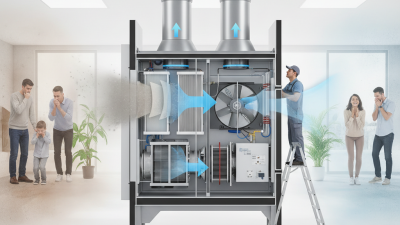
Smart HVAC controls are becoming essential for global buyers in 2026. They adjust temperature, airflow, and humidity using occupancy data and local weather signals. In a busy office, sensors can reduce cooling in empty meeting rooms within minutes. This lowers energy waste without forcing staff to change settings manually. However, poor sensor placement can create false readings. A warm window or blocked air vent may confuse the system.

AI monitoring adds another practical layer. It studies vibration, pressure, motor current, and temperature patterns across the equipment. Small changes may reveal a dirty filter, refrigerant issue, or failing fan belt. Maintenance teams can then inspect the unit before comfort declines or downtime spreads. These alerts are useful, but they are not always correct. Experienced technicians should verify unusual readings on site.

Predictive HVAC maintenance works best when controls, sensors, and service records share reliable data. Buyers should check compatibility, data ownership, cybersecurity controls, and support across different regions. Clear dashboards matter too. A facility manager should see which unit needs attention, why it matters, and how urgent the repair is. Systems should also support manual operation during network failures. This detail is often overlooked. AI can improve decisions, but it cannot replace commissioning, regular inspections, or trained judgment.

High-Efficiency Systems for Decarbonized Heating and Cooling

High-efficiency HVAC systems are becoming central to decarbonized heating and cooling worldwide. For global buyers, the decision now extends beyond purchase price and seasonal efficiency ratings.

Variable-speed compressors adjust output as room loads change, reducing frequent starts and energy waste. In a cold warehouse, a modern heat pump can maintain stable temperatures while recovering useful heat from exhaust air.

The numbers matter.

Buyers should compare seasonal performance, not laboratory efficiency alone.

Refrigerant selection also affects long-term environmental impact. Lower-global-warming-potential options can support emissions targets, but safe handling requires trained technicians and suitable equipment.

Smart controls can coordinate ventilation, occupancy, weather forecasts, and electricity prices. However, poor commissioning may erase much of that potential.

A highly efficient unit performs badly when airflow is restricted or sensors are misplaced.

Local conditions deserve careful attention. A humid coastal building needs different moisture control from a dry inland facility. Grid carbon intensity, winter temperatures, service availability, and building insulation should shape the specification.

Lifecycle cost studies should include filters, refrigerant checks, software updates, and replacement parts. These details often receive less attention than attractive efficiency figures.

Experience from commercial projects shows that maintenance planning is not optional. No system is perfect.

Some buyers may also overestimate the benefits of automation while underinvesting in envelope improvements.

Independent testing, transparent performance data, and documented commissioning records provide stronger evidence than sales claims.

Decarbonization works best when equipment, building design, local expertise, and daily operation are evaluated together.

Low-GWP Refrigerants and Next-Generation Heat Pump Solutions

2026 Top HVAC Technology Trends for Global Buyers

Low-GWP Refrigerants and Next-Generation Heat Pump Solutions

Global HVAC buyers are giving greater attention to refrigerant impact and seasonal efficiency. Low-GWP options can reduce climate damage during leaks and equipment replacement. Common choices include carbon dioxide, propane, and newer hydrofluoroolefin blends. Each option has different pressure, flammability, servicing, and temperature requirements.

Safety comes first.

A suitable refrigerant depends on local codes, building use, climate, and technician training. Carbon dioxide systems may perform well for commercial hot water, but they require high-pressure components. Propane can support efficient heat pumps, yet installation needs careful charge control and ventilation planning. A low GWP alone does not guarantee a responsible system.

Next-generation heat pumps now use variable-speed compressors, advanced defrost controls, and vapor-injection technology. These features can maintain heating output during cold mornings and reduce unnecessary cycling. Integrated thermal storage may also shift electrical demand away from expensive peak periods. Buyers should request seasonal performance data, noise measurements, spare-parts plans, and refrigerant recovery procedures.

Field evaluations often reveal a gap between laboratory ratings and real buildings. Poor pipe sizing, weak airflow, or incorrect controls can erase expected savings. That assumption deserves scrutiny. Reliable procurement includes commissioning records, verified efficiency tests, and clear maintenance access. Equipment should remain serviceable after several winters, not merely impressive on a specification sheet.

2026 Top HVAC Technology Trends for Global Buyers - Low-GWP Refrigerants and Next-Generation Heat Pump Solutions

Technology / Trend Representative Refrigerant Approx. GWP
(100-year)
ASHRAE 34
Safety Class
Typical Applications Key Advantages Main Buyer Considerations
Low-GWP A2L split-system transition R-32 675 A2L
Lower flammability
Residential air conditioners, air-to-air heat pumps, small commercial systems Lower GWP than legacy HFC-410A; good volumetric capacity; widely supported by existing refrigerant technology Requires A2L-compatible installation procedures, leak detection considerations, ventilation controls and trained technicians
Lower-GWP blended refrigerants for residential heat pumps R-454B 466 A2L
Lower flammability
Residential and light-commercial air conditioners and heat pumps Very substantial GWP reduction compared with R-410A; designed for equipment platforms requiring similar operating characteristics Glide and fractionation must be managed; equipment must be specifically designed and certified for the refrigerant
Natural-refrigerant high-efficiency heat pumps R-290 / Propane Approximately 3 A3
Higher flammability
Monobloc air-to-water heat pumps, hydronic heating, commercial refrigeration and selected packaged systems Very low climate impact; strong thermodynamic performance; suitable for high-temperature heating designs when properly engineered Charge limits, site zoning, ventilation, electrical protection, factory-sealed construction and national safety rules are critical
Transcritical heat-pump systems R-744 / Carbon dioxide 1 A1
Non-flammable
Domestic hot water, commercial hot water, heat recovery and selected cold-climate applications Non-flammable, non-ozone-depleting and capable of producing high hot-water outlet temperatures Operates at substantially higher pressures; component selection, pressure controls and service capability require specialist expertise
Ultra-low-GWP HFO-based systems R-1234ze(E) Less than 1 A2L
Lower flammability
Chillers, industrial heat pumps and selected medium-to-large commercial systems Near-zero GWP and useful performance in systems designed around its pressure-temperature characteristics May require larger heat-transfer surfaces or different compressor designs; confirm operating envelope and local availability
Cold-climate inverter heat pumps R-32, R-454B or R-290 depending on system design Approximately 3–675 A2L or A3 Residential and light-commercial heating in low-temperature and variable-climate regions Variable-speed compression, enhanced vapor injection and optimized controls can improve capacity retention at low outdoor temperatures Compare capacity at the actual design temperature, not only nominal ratings; verify defrost performance, backup heat and sound levels
High-temperature air-to-water heat pumps R-290, R-744 or other application-specific low-GWP refrigerants Approximately 1–3 for natural refrigerants A1 or A3 Radiator retrofits, district heating interfaces, domestic hot water and process heating Can reduce dependence on fossil-fuel boilers and support higher water temperatures than conventional low-temperature systems Efficiency generally decreases as leaving-water temperature rises; evaluate seasonal COP, hydraulic integration and electrical peak demand
Hybrid and cascade heat-pump architectures Different low-GWP refrigerants by circuit System-dependent System-dependent Large buildings, industrial heating, heat recovery and applications with wide temperature lifts Allows each circuit to operate in a suitable pressure and temperature range; can improve flexibility and heat recovery Higher system complexity, more components, additional controls and greater commissioning requirements
Integrated thermal storage and demand response Compatible with the selected heat-pump refrigerant Not applicable Not applicable Residential water tanks, commercial hot-water storage, chilled-water systems and grid-interactive buildings Shifts heating or cooling load away from peak periods and can improve renewable-electricity utilization Requires tank sizing, control interoperability, tariff analysis and safeguards against thermal losses or microbial risks in hot-water systems
Connected monitoring and predictive maintenance Independent of refrigerant type Not applicable Not applicable Multi-site commercial HVAC, facilities management and remote service operations Enables fault alerts, performance tracking, refrigerant-leak monitoring and evidence-based maintenance scheduling Confirm data ownership, cybersecurity, communications compatibility, sensor accuracy and long-term software support
Buyer checklist for 2026 procurement: Specify seasonal efficiency under the applicable regional test standard, heating capacity at the design outdoor temperature, leaving-water temperature, sound power, refrigerant charge, safety classification, service requirements, spare-parts availability, grid-connectivity functions and compliance with local refrigerant regulations.
Data note: Approximate GWP values are based on commonly referenced 100-year IPCC AR4 values: R-32 = 675, R-454B = 466, R-290 = approximately 3, R-744 = 1 and R-1234ze(E) = less than 1. Actual regulatory classifications, charge limits and installation requirements vary by jurisdiction and equipment type.

Buyer Criteria for Comparing Global HVAC Technologies in 2026

For global HVAC buyers, the nameplate efficiency is only a starting point. The International Energy Agency’s The Future of Cooling reports that space-cooling demand could more than triple by 2050. Buyers should compare seasonal performance under local climate conditions, not laboratory ratings alone. A unit rated highly in mild weather may disappoint during humid heat or unstable power supply. Request test methods, operating limits, sound data, and part-load performance.

Refrigerant choice also deserves careful scrutiny. UNEP’s 2023 Global Cooling Watch projects cooling demand to more than triple by 2050, increasing pressure to reduce refrigerant emissions. Compare global-warming potential, recovery requirements, technician training, and future regulatory exposure. Installation quality matters too. Poor airflow, oversized equipment, and weak insulation can erase expected savings. It is an unglamorous reality.

Total cost should include energy, filters, controls, spare parts, commissioning, and disposal. Systems using open communication protocols can reduce dependency on one service channel. However, interoperability claims need practical testing. Ask for documented compatibility, cybersecurity controls, and local response times. ISO and regional standards help, but they do not remove every comparison problem. A transparent buyer scorecard should weight efficiency, climate resilience, maintainability, refrigerant risk, and lifecycle cost. The cheapest quote may become expensive after one failed summer.