
Choosing an Aluminum Extrusion Die supplier is not just a price comparison. Die design affects metal flow, profile accuracy, surface finish, and production stability. A small imbalance can leave a visible twist along a long architectural profile. The right supplier should understand the alloy, press capacity, tolerances, and expected production volume—not merely receive a drawing and quote a tool.
T. Sheppard’s technical work on aluminum-alloy extrusion supports a practical principle: metal flow and die geometry must be considered together. This is a paraphrase, not a verbatim quotation. It points to a useful question for buyers: how does a supplier test and refine a die before production? Ask about flow simulation, bearing design, tool steel, heat treatment, nitriding, trial runs, and inspection records. Clear answers matter. So does a willingness to discuss limitations.
This guide to 2026’s leading suppliers worldwide compares capabilities rather than declaring one universal winner. It considers technical experience, quality controls, customization, delivery communication, and after-sales support. A supplier with strong simulation tools may still be a poor fit if its press range does not match your profile. And rankings have limits. Public information can be incomplete, while actual performance depends on the project and working relationship. Treat the shortlist as a starting point, then verify claims with drawings, sample results, and specific questions. A good die is engineered. It is also tested, measured, and sometimes revised.
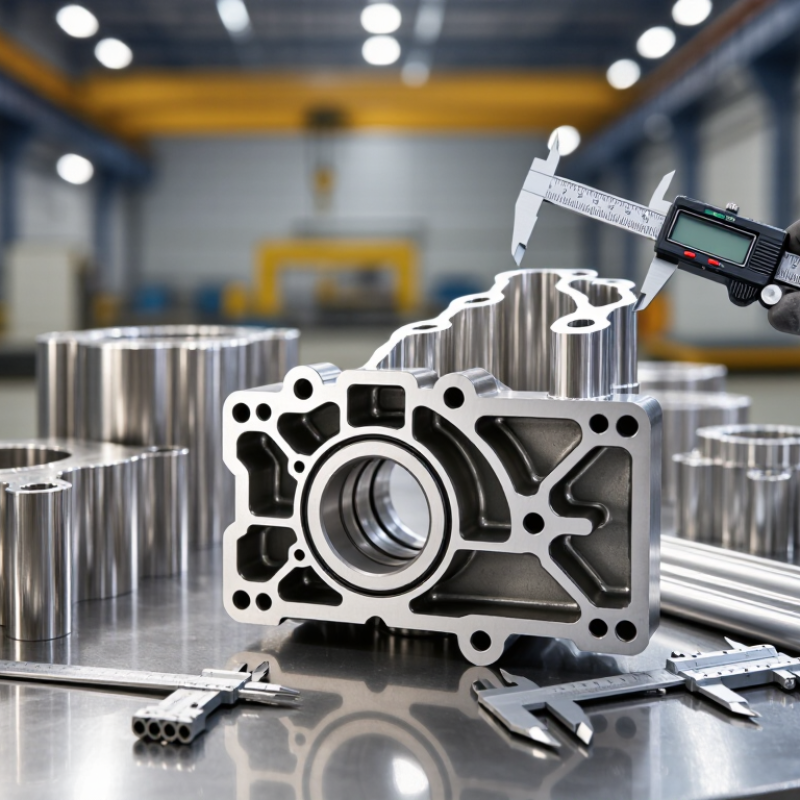
An aluminum Extrusion Die is a precision tool that shapes heated aluminum as a press pushes it through an opening. The opening’s profile determines the product’s cross-section, from a simple flat bar to a hollow channel with several internal chambers. A die is more than a cutout. Its bearing surfaces guide metal flow and help control the profile’s dimensions.
Die design affects wall thickness, surface finish, and how evenly metal exits the press. For example, a long, narrow channel may need carefully balanced flow paths to prevent one side from emerging faster than the other. Engineers consider alloy, billet temperature, press capacity, and profile complexity when selecting a die. Small design choices matter.
The die also faces heat, pressure, and repeated production cycles. Proper tool steel, heat treatment, and maintenance can support consistent output, while inspection helps reveal wear before dimensions drift. In practice, even a well-designed die may need adjustment after trial runs. That is part of the process. Choosing a supplier means looking beyond the initial drawing: ask how it evaluates manufacturability, verifies dimensions, and handles revisions when the first samples fall short.
2026 Best Aluminum Extrusion Die Suppliers Worldwide
How to Evaluate Die Suppliers in 2026
Choosing an extrusion die supplier takes more than comparing quoted prices. Ask how the supplier translates your profile drawing into die design, bearing lengths, and process recommendations. A capable team should explain trade-offs in plain language, not just promise a fast delivery. Request sample inspection records for similar profiles, including dimensional results and documented corrections. Check how quickly the supplier responds when a trial reveals uneven wall thickness or surface marks. Details matter.
Tips: Share the alloy, temper, press capacity, target tolerances, and expected production volume before requesting a quote. Ask for a realistic schedule that separates design, machining, heat treatment, and trial work. Clarify what happens if the first trial misses agreed dimensions. A written corrective-action process is useful. So are clear file-control and revision practices.
Compare suppliers using the same technical brief, then review tooling life, maintenance guidance, communication, and total cost per acceptable length—not price alone. If possible, visit the workshop or arrange a live review of die inspection and trial data. Verify that measurement methods suit your profile’s critical features. No scorecard catches everything; I would still leave room for a small trial order, because drawings rarely reveal every production wrinkle.
A practical supplier-evaluation scorecard. The percentages below are illustrative buyer-selected weights, not market statistics; adjust them to match your project.
Compare suppliers against the same evidence-based criteria, such as trial results, dimensional inspection records, lead-time commitments, and documented quality systems. Scores and weights should reflect your extrusion profile, alloy, production volume, and risk requirements.
For 2026, strong aluminum extrusion die suppliers offer more than machined steel. Their services often include die design, flow simulation, heat treatment, nitriding, trial runs, and repair. Simulation can reveal uneven metal flow before a die reaches the press. During trials, technicians may adjust bearings and openings to improve profile dimensions and surface finish. Small details matter.
The International Aluminium Institute projected that global aluminium demand could rise by nearly 40% by 2030, compared with 2020 levels. That outlook makes reliable tooling and production support increasingly important. Buyers should ask suppliers how they control steel quality, document heat-treatment cycles, and respond when a die wears early. A practical service package may include spare-die planning, scheduled maintenance, and feedback from extrusion trials. Ask for evidence, not promises.
Digital tools help, but they do not replace experienced press-floor judgment. A profile that looks simple on screen can distort during cooling. This is where suppliers’ technical support becomes visible: clear trial records, measured dimensions, and realistic troubleshooting. Some suppliers may offer impressive simulation reports, yet provide limited follow-up. That gap deserves attention.
Regional differences in aluminum extrusion die manufacturing follow nearby extrusion demand, alloy use, and delivery expectations. The International Aluminium Institute reported approximately 70.6 million tonnes of global primary aluminum production in 2023. China accounted for roughly 41.5 million tonnes, making East Asia a major center of aluminum processing activity. These figures describe metal production, not die output. Still, they help explain why regional tooling networks often cluster near large extrusion markets.
A die is not just steel. Its bearing design, heat treatment, and trial runs shape profile accuracy and production speed. The Aluminium Association’s industry data tracks broad U.S. aluminum activity, but public reports rarely isolate die-making capacity by region. That gap matters.
Buyers should compare lead times, tooling trials, and local technical support rather than treating regional production totals as supplier rankings. A large market does not guarantee a better die.
Choosing an aluminum extrusion die supplier depends on the part, production volume, and required tolerances. Grand View Research estimated the global aluminum extrusion market at about $90.5 billion in 2023, with growth expected through 2030. That expanding market spans window frames, heat sinks, transport components, and complex industrial profiles. A large press is not automatically the best fit. Ask suppliers about press capacity, billet dimensions, die design support, and trial-run procedures. The details matter.
For thin-walled profiles, compare dimensional control and the supplier’s experience managing die deflection. For heat sinks, review fin spacing, alloy options, and surface finish. Transport applications may require consistent properties across long production runs. The International Aluminium Institute’s 2023 outlook projected aluminum demand could rise by nearly 80 percent by 2050, increasing pressure to use material efficiently. This makes scrap handling and yield data useful comparison points. Request sample inspection records, realistic lead times, and details on die maintenance. A supplier may promise tight tolerances, but ask how those tolerances are measured. Then check the answer against your drawing and application. Not every comparison is tidy. Some suppliers provide stronger technical support; others offer better access to high-volume capacity. Decide which trade-off your project can accept.
Comparison of supplier capability profiles, not named companies. Press-force ranges and typical applications are indicative industry ranges; actual capabilities vary by plant, billet size, alloy, profile geometry, and quality requirements. Verify current equipment and certifications directly with each supplier.
| Supplier profile | Common sourcing regions | Indicative press-force range | Typical capability | Best-fit applications | Key selection checks |
|---|---|---|---|---|---|
| High-volume integrated extruder | North America, Europe, East Asia | About 1,000–10,000+ metric tonnes | Large production runs; extrusion may be combined with heat treatment, finishing, fabrication, and inspection. | Automotive structures, transportation, building systems, industrial sections | Alloy and temper range, press/container dimensions, die-maintenance process, traceability, annual capacity |
| Precision-profile specialist | Europe, Japan, South Korea, Taiwan | About 600–4,000 metric tonnes | Focus on dimensional control, complex cross-sections, surface quality, and process consistency. | Electronics housings, precision machinery, heat sinks, architectural components | Tolerance capability by profile, straightness and twist controls, measurement methods, sample approval process |
| Large-section and heavy-extrusion producer | North America, Europe, China, India | About 3,000–10,000+ metric tonnes | Equipment and handling systems suited to larger billets and heavier or wider profiles. | Rail, commercial vehicles, structural frames, energy and infrastructure equipment | Maximum circumscribed circle, billet diameter, profile length, quench capacity, downstream handling |
| Small- and mid-size flexible extruder | Global; commonly found near regional manufacturing hubs | About 600–2,500 metric tonnes | Often suited to shorter runs, frequent profile changes, and a broad mix of standard sections. | Consumer products, furniture, general industrial parts, small architectural sections | Minimum order quantity, die lead time, changeover capability, dimensional repeatability, export packaging |
| Regional cost-focused producer | South and Southeast Asia, China, Latin America, Eastern Europe | Commonly about 600–5,000 metric tonnes; facility-dependent | May offer competitive conversion costs and a mix of extrusion and standard finishing services. | Building products, general engineering, consumer goods, non-safety-critical components | Material certificates, process audits, inspection plan, export logistics, consistency across repeat orders |
| Die design and tooling specialist | Worldwide; frequently located near extrusion and manufacturing clusters | Not applicable unless extrusion is also offered | Designs and manufactures extrusion dies; may provide flow analysis, trials, correction, and die refurbishment. | Complex, thin-wall, hollow, or tightly toleranced profiles requiring tooling development | Die-steel specification, hollow-die expertise, trial arrangements, revision ownership, repair turnaround |
Procurement note: Press tonnage alone does not establish profile feasibility. Confirm alloy and temper, billet size, profile dimensions and complexity, tolerances, heat-treatment requirements, finishing, inspection standards, tooling ownership, lead time, and delivered cost for the specific part.