
A grid-connected solar array can turn a bright roof into useful daytime electricity, while still relying on the utility network after sunset. The right On Grid Solar System depends on more than panel output. Roof direction, shade, inverter quality, local service, and export rules can change the value of a seemingly similar package. Small details matter. A chimney shadow at 4 p.m. can affect a string of panels more than a glossy brochure suggests.
Energy expert Amory Lovins, physicist and co-founder of the Rocky Mountain Institute, is widely associated with the reminder: “The cheapest energy is the energy you don’t use.” It is a useful lens for comparing solar systems. Before focusing on maximum capacity, consider insulation, appliance schedules, and when your household uses power. Solar should fit the home, not just the sales estimate.
This guide examines seven leading on-grid options for 2026, comparing efficiency, inverter design, monitoring, warranty terms, and installer support. Product availability and prices vary by region, and a model that performs well in one climate may not suit another. That part is less tidy. Treat the list as a practical shortlist, then ask installers for site-specific production estimates and written assumptions. Check shade, roof condition, and expected daytime use before signing. A careful comparison can reveal trade-offs that headline wattage alone misses.
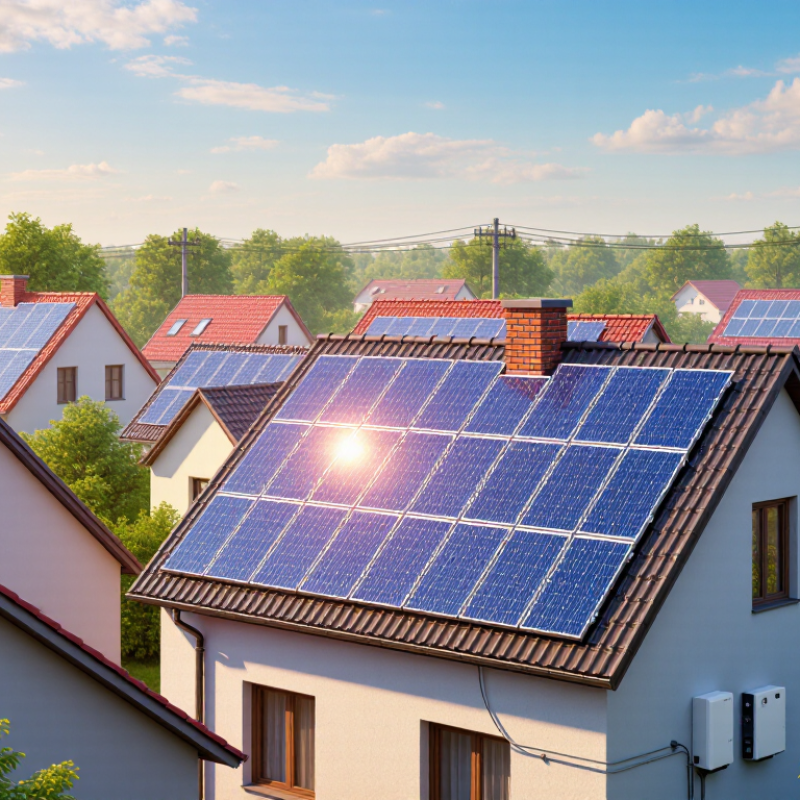
An on-grid solar system connects rooftop panels to a building’s electrical circuits and the public grid. Panels produce direct current, or DC. An inverter converts it into alternating current, or AC, and synchronizes its voltage and frequency with the grid. Appliances use solar electricity when it is available; surplus power may flow outward through a bidirectional meter. After sunset, the building draws electricity from the grid. Simple in principle. Your actual savings depend on local export credits, utility rates, roof shade, and household use.
The grid is not a backup battery. Most standard grid-connected inverters shut down during an outage to prevent electricity from flowing onto lines that workers may be repairing. Backup power requires compatible equipment, usually including storage and a way to isolate the home safely. The IEA PVPS Snapshot of Global PV Markets 2025 reports that worldwide photovoltaic capacity exceeded 2.2 terawatts by the end of 2024, reflecting how widely this grid-connected technology is used. Still, scale does not guarantee a good fit for every roof. A shaded panel, poorly placed meter, or mismatched daytime demand can reduce the value of a system. This part is easy to overlook. Check local interconnection rules and the utility’s export compensation before comparing system designs.
When comparing on-grid solar systems, check how well each design fits the home’s actual electricity use. An inverter should handle the planned panel capacity without being consistently undersized or needlessly oversized. Ask for expected annual output, not just a headline efficiency figure. Shading from a chimney can change the estimate. Small detail. Often missed.
Compare monitoring tools, too. Useful systems show daily generation, household consumption, and grid imports in clear units. Some provide alerts when output drops; others only show broad monthly totals. A polished app is not proof of better performance. Ask what data remains available if the internet connection fails, and who investigates persistent faults. That answer can reveal more than a feature list.
Check equipment warranties and the installer’s workmanship coverage separately. They protect against different problems. Confirm that the proposed system suits local grid connection requirements and any export limits that apply to the property. If outages matter, ask directly: will the system shut down during a grid failure? Many standard on-grid systems do, for safety, unless designed with compatible backup equipment. It is easy to overlook this while comparing prices. Request the assumptions behind the quote, including roof orientation, shading, and expected household use.
| System Type | Typical Scale | Shade and Panel Mismatch | Monitoring | Battery and Outage Readiness | Main Advantages | Key Limitations |
|---|---|---|---|---|---|---|
| String inverter system | Homes and small businesses; often about 3–20 kW | Best on relatively unshaded roofs with similarly oriented panels. Shade on one panel can reduce output from other panels in the same string. | Usually reports system or string-level production; panel-level monitoring may require additional hardware. | Typically needs a compatible battery inverter or other approved storage equipment for battery backup. A standard grid-tied system shuts down during a grid outage for safety. | Simple design, widely available equipment, and generally lower installation complexity. | Less flexible when panels face different directions or experience uneven shading. |
| Microinverter system | Homes and small businesses; commonly about 2–20 kW | Each panel operates independently, which can limit the effect of shade or differing roof orientations on neighboring panels. Shade still reduces the output of the affected panel. | Typically provides panel-level production monitoring. | Storage is generally added through an AC-coupled battery system. Backup requires a compatible battery and equipment that safely isolates the home from the grid. | Flexible panel layouts and detailed monitoring; a single panel or inverter issue usually affects less of the array. | More power electronics are installed on the roof, and panel-level equipment can increase upfront cost. |
| DC optimizers with a string inverter | Homes and small businesses; commonly about 3–20 kW | Panel-level electronics help manage mismatch from shade or different panel orientations, though they cannot recover sunlight that a shaded panel does not receive. | Often supports panel-level monitoring when the system includes compatible monitoring hardware. | Battery options depend on the inverter design. Backup still requires storage and approved grid-isolation equipment. | Combines panel-level power management with a central inverter; useful for roofs with multiple orientations or partial shade. | More components than a basic string system; monitoring and storage features vary by equipment configuration. |
| Hybrid inverter with DC-coupled battery | Homes and small businesses; commonly about 3–20 kW, with storage sized to household needs | Depends on the solar input design: a hybrid inverter may use multiple string inputs, optimizers, or other module-level equipment. | Usually monitors solar production, battery charging, and household energy flows through a compatible platform. | Designed to connect solar and a compatible battery. Backup is available only when the system includes the required battery, transfer or isolation equipment, and backup circuits. | Can provide an integrated path for solar, storage, and backup; DC coupling can reduce conversion steps when charging a battery from solar. | Battery compatibility and backup power limits are model-specific; system design can be less flexible when replacing equipment later. |
| Grid-tied solar with an AC-coupled battery | Homes and small businesses; solar commonly about 3–20 kW | Solar shading performance depends on the existing inverter and panel-level equipment. | Solar and battery monitoring may be provided by separate or integrated systems. | A battery connects on the AC side and may be added to an existing solar installation. Backup requires compatible controls and safe isolation from the grid. | Can suit retrofits where the existing solar inverter is retained; battery charging can use solar or grid electricity, subject to system settings and local rules. | Energy may pass through additional conversion steps; compatibility, backup behavior, and control features need to be checked. |
| Three-phase commercial string-inverter system | Commercial rooftops and larger buildings; often tens of kilowatts to several megawatts across multiple inverters | Multiple inverter inputs can accommodate separate strings and roof sections. Performance under shade depends on string layout and inverter features. | Typically supports inverter-level monitoring and site-wide monitoring through compatible controls. | Storage can be added with suitable three-phase battery equipment. Backup for a commercial site requires engineered controls and may not support the entire building load. | Scales across large arrays and can simplify system expansion and maintenance compared with a single large inverter. | Requires careful electrical design, protection coordination, and utility interconnection review. |
| Central-inverter grid-tied system | Large commercial, industrial, and utility-scale projects; generally hundreds of kilowatts to megawatts | Panels are arranged in large strings feeding centralized conversion equipment. Layout and string design are important where shading or varied orientations exist. | Usually uses inverter-level and plant-level monitoring rather than individual panel monitoring. | Battery storage can be integrated with separate power-conversion equipment or a project-specific design. Grid-outage operation requires controls and an approved operating configuration. | Suitable for large, uniform arrays and centralized operation and maintenance. | Not typically suited to ordinary residential roofs; a centralized equipment fault can affect a substantial portion of the plant. |
Comparison note: System size, efficiency, battery compatibility, export limits, and backup capability depend on the specific equipment, site design, utility requirements, and local codes. Most standard grid-tied solar systems automatically stop supplying power during a grid outage unless designed with approved storage and isolation equipment.
On-grid solar systems send surplus electricity to the utility grid, while drawing power when panels produce too little. For 2026, seven practical options deserve a closer look: string-inverter systems, microinverter systems, power-optimizer systems, high-efficiency panel systems, shade-tolerant layouts, compact-roof designs, and systems with detailed energy monitoring. These are system types, not a fixed ranking; local equipment availability and roof conditions can change the best choice.
A string inverter can suit an open, sunny roof with panels facing one direction. Microinverters or optimizers may help when roof sections face different directions or experience partial shade. High-efficiency panels can make better use of limited space, though they may cost more. Compact designs need careful attention to access paths and future maintenance. Monitoring can reveal drops in production, but it cannot fix a poorly planned layout. Small differences matter. Actual savings depend on household use, utility rates, installation quality, and local grid rules.
Tips: Ask for a site-specific shade assessment and an estimate of annual production, not just panel capacity. Check inverter warranties, monitoring access, and what happens during a grid outage. Standard grid-tied systems generally shut down during outages for safety, unless designed with approved backup equipment. I would not choose from a “best” list alone; even a well-rated system can disappoint on the wrong roof.
A useful comparison of the seven best on-grid solar systems for 2026 should start with the installed cost, not the panel price alone.
Request itemized quotes covering panels, inverter, mounting hardware, electrical work, permits, and monitoring. Prices vary with roof condition, system size, labor rates, and local billing terms. A low quote may exclude important work. Ask what happens if the installer finds damaged shingles or an outdated electrical panel.
Efficiency figures help, but they do not predict a household’s exact output. Roof direction, shade from a chimney, and even dust can affect production. A site assessment should estimate annual energy using your roof and local weather, not just ideal laboratory figures. Small details matter.
Compare product, performance, inverter, and workmanship warranties separately; their coverage periods and exclusions may differ. Read the exclusions. Check who handles service if an installer closes, and whether labor or shipping costs are included in a repair.
Payback estimates deserve scrutiny, too: future electricity prices and export credits can change. I would not choose a system on efficiency alone; a slightly lower-rated option may make more sense if its installed cost, service access, and warranty terms fit the home better.
Choosing an on-grid solar system starts with your actual electricity use, not the largest array that fits your roof. Review twelve months of bills and note when you use power. Running laundry or cooling the home at noon can make self-consumption more valuable. A smaller, well-matched system may serve you better. Sometimes, less is smarter. Roof shade, direction, age, and available area also matter; a chimney shadow at 3 p.m. can reduce output more than a sunny roof photo suggests.
Ask how the inverter manages output, what the monitoring system tracks, and whether the system can be expanded. Grid-connected systems usually stop supplying power during an outage unless designed with suitable backup equipment. That surprises people. Confirm this before comparing quotes. Export credits and connection requirements vary by location, so use current local utility information rather than an assumed payback estimate.
Compare proposals using the same system size, estimated annual production, equipment warranties, and installation scope. Ask the installer to explain shade and production assumptions plainly, and check relevant credentials and references. Look for itemized costs and a clear service process. A glossy dashboard is not a guarantee. Payback estimates are forecasts, not promises; weather, household habits, and future electricity rates can change them. Leave room for uncertainty. If one quote looks unusually impressive, ask which assumptions make it so.