How to Use Aerogel Isolation for Superior Thermal Insulation?
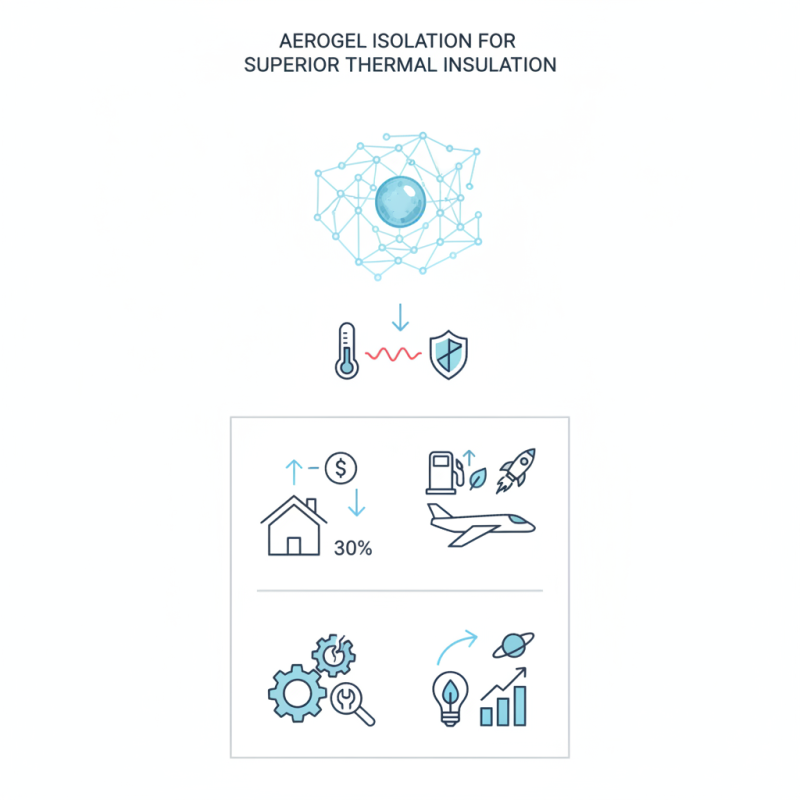
Aerogel Isolation is transforming thermal insulation in various industries. Research indicates that aerogel products offer the lowest thermal conductivity, often as low as 0.013 W/m·K. This remarkable efficiency helps conserve energy, reducing heating and cooling costs in buildings by up to 30%. Its lightweight nature—over 90% air—makes it an ideal solution for space-constrained environments.
In the aerospace sector, the use of Aerogel Isolation is pivotal. It greatly reduces weight, enhancing fuel efficiency in aircraft. According to the National Aeronautics and Space Administration (NASA), using aerogel in spacecraft can minimize thermal loss, improving mission success rates. However, challenges persist, such as the cost of production and handling.
To maximize the benefits of Aerogel Isolation, developers must address issues such as material brittleness and durability over time. While aerogel technology holds great promise, ongoing research is essential to refine these materials for broader applications. Investing in this innovative insulation method could significantly impact energy efficiency standards across numerous fields.
Understanding Aerogel: Properties and Types for Thermal Insulation
Aerogel has emerged as a groundbreaking material in the field of thermal insulation. Its unique properties make it an ideal choice for various applications. Mainly composed of air, aerogel is incredibly lightweight. It can be up to 99.8% air, giving it excellent insulation capabilities. The material’s low thermal conductivity allows it to keep structures well-insulated from extreme temperatures.
There are different types of aerogels, each tailored for specific insulation needs. Silica aerogel is the most common, known for its durability and high performance. Other varieties, like carbon aerogel, are valued for their electrical conductivity and thermal insulation. Each type offers unique benefits, but they also come with challenges. For instance, some aerogels can be brittle, requiring careful handling during installation.
Understanding the properties of aerogel can help in making informed decisions for insulation projects. Designers and engineers should consider factors like cost and ease of application. While aerogel offers superior performance, its production can be resource-intensive. This balance between efficiency and sustainability remains a topic worth exploring.
The Science Behind Thermal Insulation and Aerogel Mechanisms
Aerogel is often considered a revolutionary material in thermal insulation due to its unique properties. It is composed of more than 90% air yet has a solid structure, making it incredibly lightweight. This thin structure disrupts heat transfer efficiently. Aerogels can achieve low thermal conductivity because of their porous nature. This structure causes heat to reflect rather than transmit. Understanding how these mechanisms work is essential for anyone looking to improve insulation.
When using aerogel, consider its application environment. Suitable conditions can enhance its efficacy significantly. For instance, aerogel works best in environments with static air. Movement can disrupt insulation, reducing its effectiveness. Monitor airflow in the area to achieve optimal performance.
Tips for aerogel usage include applying it in layers to maximize insulation. Each layer adds an extra barrier against heat transfer. Ensure proper sealing to minimize air gaps. Finally, maintenance is vital. Inspect the aerogel periodically for any signs of damage. A well-maintained aerogel system can sustainably provide excellent thermal resistance.
Applications of Aerogel Isolation in Various Industries
Aerogel isolation has found diverse applications across various industries due to its outstanding thermal insulation properties. In the construction sector, aerogel is used in insulating walls, roofs, and windows. It significantly reduces heat loss, enhancing energy efficiency. Buildings equipped with aerogel insulating materials show notable improvements in maintaining comfortable temperatures.
In the aerospace realm, aerogel serves as a lightweight insulator for spacecraft. Its ability to withstand extreme temperatures is critical for protecting sensitive instruments. However, challenges remain in large-scale production and integration into existing designs. The automotive industry also benefits from aerogel, using it in electric vehicles for heat management. Car manufacturers are increasingly looking at aerogel, but the cost and sourcing of materials can be a barrier.
The oil and gas industry utilizes aerogel for pipeline insulation, minimizing heat loss during transportation. While the performance is commendable, the durability of aerogel in harsh environments needs further assessment. There are many promising applications, but companies must address technical hurdles before full-scale adoption becomes viable.
Best Practices for Implementing Aerogel for Thermal Insulation
Aerogel is recognized for its exceptional thermal insulation properties. Implementing aerogel for thermal insulation requires careful consideration of its unique characteristics. Its low thermal conductivity, often around 0.013 W/m·K, makes it one of the most effective insulating materials available. This property helps reduce energy consumption significantly in building applications.
Best practices suggest using aerogel in layers for enhanced performance. For example, integrating aerogel blankets or panels into wall systems can improve energy efficiency by up to 30%. However, installation can be tricky. Adequate sealing and protection from moisture are essential to maintain aerogel's performance. Improper handling or exposure can lead to degradation, thus requiring precise installation techniques.
While aerogel offers superior insulation, it also presents challenges. Its cost can be a barrier for some projects. Each application must be assessed for cost-effectiveness. Over time, the reduction in energy bills may offset initial investment. Despite its advantages, proper training is vital. Teams must understand aerogel's properties and limitations. Knowledgeable personnel can maximize aerogel's potential in various applications.
Comparing Aerogel with Traditional Insulation Materials
Aerogel is emerging as a leading player in the thermal insulation market, surpassing traditional materials. According to a report by the U.S. Department of Energy, aerogel’s thermal conductivity is as low as 0.013 W/m·K. In contrast, fiberglass insulation typically has a thermal conductivity around 0.04 W/m·K. This significant difference means aerogel can effectively reduce heat transfer, offering superior insulation.
The performance of aerogel is particularly notable in applications requiring thin profiles. For instance, an aerogel blanket can provide the same insulation as a thick fiberglass board, enabling space-saving designs in buildings. However, cost remains a concern.
Aerogel tends to be more expensive than traditional options, leading some to question its practicality. One study highlighted that while aerogel offers increased efficiency, the initial investment could deter widespread adoption.
Moreover, aerogel, being a fragile material, poses challenges in handling and installation. Industry professionals often need specialized training to ensure proper usage. While aerogel holds great promise, these factors can complicate its implementation in residential and commercial projects. Balancing effectiveness and cost remains a critical consideration for architects and builders.