
Skip to content

Top 10 Benefits of Die Casting Parts for Global Buyers?

Die Casting Parts have become essential components in various industries. They provide unique advantages that appeal to global buyers. With the increasing demand for high-quality and precise engineering, understanding these benefits is crucial.

These parts are known for their durability and strength. Their consistent quality leads to lower rejection rates during manufacturing. A well-optimized die casting process allows for intricate designs, reducing the need for complex assembly. This efficiency can significantly lower production costs.

However, buyers should reflect on their specific needs. Not all die casting methods suit every application. They must carefully assess factors like material compatibility and production volume before committing. Overall, exploring the top benefits of Die Casting Parts can guide informed decision-making, enhancing product quality and performance.
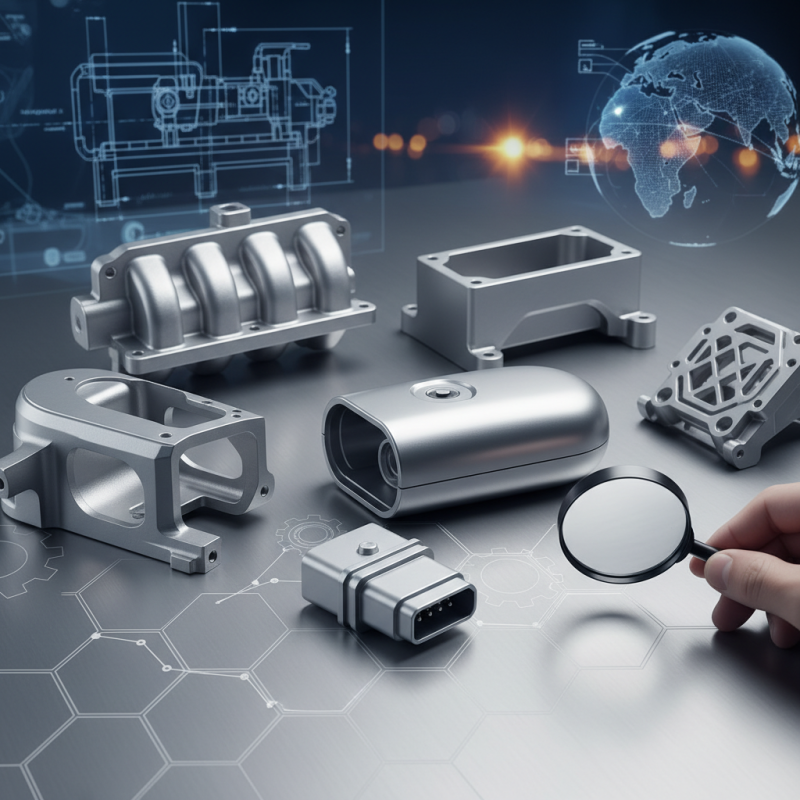
Top 10 Benefits of Die Casting Parts for Global Buyers?

Benefits of Die Casting: Overview of Efficiency and Precision

Die casting offers significant advantages for manufacturers seeking efficiency and precision. This process allows for high-volume production of intricate parts with excellent dimensional accuracy. According to a recent industry report, die casting can achieve tolerances as tight as ±0.1 mm, which is crucial for components requiring precise fit and function.

The efficiency of die casting is remarkable. It enables rapid production cycles, often reducing lead times by up to 75%. This speed can significantly impact overall production schedules and inventory management. However, companies must be aware that achieving this efficiency requires substantial initial investment in molds and machinery. While the long-term benefits often outweigh these costs, businesses should analyze their production needs carefully.

Material versatility is another benefit. Die casting can utilize a variety of alloys, including aluminum, magnesium, and zinc. Each material offers unique properties suitable for specific applications. Yet, this flexibility comes with challenges, such as selecting the right alloy for the intended use. Over time, companies have learned that failing to choose appropriately can lead to reduced product longevity or increased failure rates in the field. This highlights the importance of diligent material assessment in the die casting process.

Top 10 Benefits of Die Casting Parts for Global Buyers

Benefit Description Applications
High Precision Die casting provides excellent dimensional accuracy and tight tolerances for parts. Automotive, aerospace, electronics
Efficiency in Production Fast production rates allow for high output, reducing cycle time significantly. Mass production of components
Material Versatility Can be used with a variety of metals including aluminum, zinc, and magnesium. Consumer electronics, industrial parts
Complex Geometries Allows for the creation of parts with intricate shapes that would be difficult to achieve with other methods. Automotive engine components, housings
Reduced Waste Minimal material waste compared to other fabrication methods. Sustainability-focused manufacturing
Surface Finish Provides a good surface finish right out of the mold, reducing the need for secondary processes. Aesthetic parts, decorative items
Strength and Durability Die cast parts are known for their structural integrity and strength. Heavy machinery, tools
Cost-Effectiveness Lower per-part costs at high volumes make it a financially feasible option. Large scale projects, commodity products
Improved Lead Times Shorter production cycle can expedite product time-to-market. Rapid prototyping, new product launches
Customization Options Ability to customize features and designs to meet specific customer needs. Bespoke manufacturing, special orders

Durability and Strength: Key Advantages of Die Cast Parts

Die casting parts are renowned for their durability and strength, making them a preferred choice in various industries. A report from the International Die Casting Association indicates that die cast components can achieve tensile strengths of up to 50,000 psi. This quality ensures that products made from these parts maintain their integrity under stress. The precision of die casting also allows for the production of complex shapes. This reduces the need for additional machining and enhances overall structural integrity.

Many industries rely on die casting for critical components. For instance, the automotive sector values parts created through this method because they withstand high temperatures and corrosion. According to industry research, around 70% of die cast parts are used in automobiles. This highlights the process's significance in ensuring vehicle safety.

Tip: When considering die casting, think about the specific strength requirements of your application. Not every project needs the extreme durability die cast parts offer. Weighing your options can save costs.

Another factor is the environmental impact. Die casting is generally more efficient than other manufacturing methods. Yet, energy consumption can vary based on equipment and materials. It's crucial to evaluate the sustainability aspects of your chosen process.

Tip: Always check for certifications related to environmental standards when selecting manufacturers. This can reveal their commitment to responsible practices.

Top 10 Benefits of Die Casting Parts for Global Buyers

Cost-Effectiveness: Saving on Materials and Production

Die casting presents significant cost savings for manufacturers. Due to its efficient production process, material wastage is minimized. According to a 2022 industry report, the die casting process can save up to 25% on materials compared to traditional machining methods. The reduced scrap rate contributes to lower overall production costs.

High-volume production benefits significantly. Once the molds are created, they can be reused for thousands of parts. This aspect ensures that the initial investment in mold creation pays off quickly. In fact, over 70% of die casting companies reported improved profitability through enhanced production efficiency.

However, there are considerations. The upfront cost for mold creation can be substantial. It might take time to offset this expense with savings from mass production. Some businesses may hesitate due to this initial investment. Yet, the long-term financial benefits cannot be ignored. Proper planning and analysis are crucial to achieving optimal cost-effectiveness.

Design Flexibility: Customization Options in Die Casting

Die casting offers significant design flexibility, making it a preferred choice for many industries. This method allows for complex geometries and intricate details that can be difficult to achieve with other manufacturing processes. Buyers can customize their parts to meet specific needs. This flexibility extends to various materials, including aluminum, magnesium, and zinc, enhancing the ability to create parts with different properties.

Tips: Consider your design requirements early in the process. Collaborating with engineers can yield better results. Understanding material properties can help in finalizing designs that are both functional and economical.

Die casting is not just about the visual appeal; it’s about functionality too. Customization can come with trade-offs, like cost and production time. Each project may have unique challenges that require thoughtful consideration. Testing prototypes before finalizing designs is an effective approach. This not only ensures quality but also provides insights into potential issues that may arise during mass production.

Tips: Always review your design for manufacturability. Engage with seasoned professionals who understand the nuances of the die casting process. Identifying potential flaws early can save time and resources in the long run.

Environmental Benefits: Sustainable Aspects of Die Casting Techniques

Die casting techniques offer several environmental benefits that are becoming increasingly important for manufacturers and global consumers. One significant advantage is the reduction of waste. The die casting process typically generates less scrap material compared to other metalworking methods. This efficiency not only conserves resources but also decreases overall production costs. The ability to recycle aluminum and zinc further enhances sustainability, promoting a circular economy within the industry.

Another aspect to consider is energy consumption. Die casting requires less energy than traditional manufacturing processes. This translates into lower carbon emissions during production. Moreover, advancements in technology continue to improve the energy efficiency of die casting methods. These innovations help manufacturers meet their sustainability goals while addressing the growing demand for eco-friendly products.

However, there are challenges that the die casting industry faces. Not all materials are easy to recycle, and certain die casting methods can still produce emissions. It’s critical for companies to analyze their processes and seek continuous improvement. Striving for a balance between production efficiency and environmental responsibility is essential. The industry must adapt to changing regulations and consumer expectations, promoting a sustainable future in manufacturing.