Skip to content

China Top Airflow HVAC Manufacturers for Global Buyers

China Top Airflow HVAC Manufacturers for Global Buyers explores how international purchasers can assess Chinese suppliers with greater confidence. The focus is airflow hvac equipment, including air handling units, ventilation systems, fans, filters, and heat recovery solutions. These products influence indoor comfort, energy consumption, maintenance costs, and building safety.

A reliable manufacturer should demonstrate more than attractive pricing. Buyers should review factory capacity, engineering experience, airflow testing, material selection, and quality-control procedures. Useful evidence may include test reports, project references, production photographs, and clear technical drawings. Details matter. A supplier that explains fan curves, pressure loss, noise levels, and filter grades shows stronger technical understanding. However, documents should match the actual model supplied.

This guide considers manufacturers serving commercial buildings, factories, hospitals, hotels, and other demanding applications. It also examines customization, lead times, spare parts, installation support, and communication after delivery. Regional certifications and performance requirements must be checked carefully before ordering. A certificate alone does not prove consistent field performance. Not every quote is equal.

Some manufacturers may offer impressive specifications but provide limited commissioning assistance. Others may communicate well while lacking advanced testing equipment. That gap matters. Global buyers should compare complete lifecycle value, not only the initial purchase price. Factory audits, sample inspections, and independent verification can reduce avoidable risks. The market is not perfectly uniform, and no ranking should replace practical due diligence. With disciplined comparison, buyers can identify airflow hvac partners that combine engineering capability, transparent documentation, dependable production, and realistic long-term support.

China Top Airflow HVAC Manufacturers for Global Buyers

Defining Airflow HVAC Systems and Their Role in Global Markets

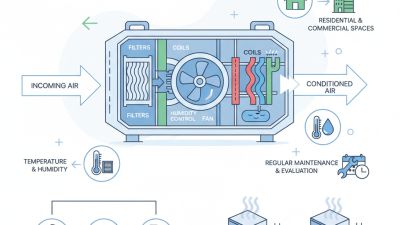
Airflow HVAC systems manage the movement, temperature, humidity, and cleanliness of indoor air. They use fans, ducts, filters, dampers, coils, and control sensors. Together, these components create a planned air path through a building. Good airflow supports comfort, energy efficiency, and healthier working conditions. It also reduces stagnant zones near corners, equipment, and crowded work areas.

Global buyers often evaluate Chinese HVAC manufacturers for large projects, replacement parts, and customized air-handling units. Their role extends beyond production. Reliable manufacturers should provide airflow calculations, pressure-loss data, wiring diagrams, testing records, and installation guidance. Factory acceptance testing can reveal unstable fan performance or excessive vibration before shipment. Buyers should also check local electrical requirements, fire regulations, climate conditions, and service availability. A system designed for a humid coastal warehouse may fail in a dry, high-altitude facility.

Tips: Request measured airflow data. Confirm filter grades and replacement access. Ask how controls communicate with existing systems. Review noise readings at expected operating conditions. Do not judge quality from appearance alone.

In practice, specifications are sometimes incomplete, and that creates avoidable disputes. I have seen projects focus on cooling capacity while ignoring duct resistance and balancing. That approach looks efficient on paper. It is not always efficient in operation. Experienced suppliers should explain assumptions clearly and accept technical questions. Global buyers also need independent checks, especially when language, standards, and commissioning practices differ. Good airflow is not a product feature alone. It is a result of design, manufacturing, installation, and ongoing adjustment.

Key Criteria for Evaluating China’s Airflow HVAC Manufacturers

China Top Airflow HVAC Manufacturers for Global Buyers

Key Criteria for Evaluating China’s Airflow HVAC Manufacturers

Selecting an airflow HVAC manufacturer requires more than comparing prices. Check airflow volume, external static pressure, sound levels, and energy performance under stated conditions. Ask for laboratory reports, factory test records, and traceable component data. A reliable supplier should explain how results were measured. Vague claims deserve caution.

Inspect production details when possible. Look for clean assembly areas, calibrated testing equipment, and documented quality checks. Ask whether technicians test motors, filters, dampers, and control panels before shipment. Materials also matter. Galvanized steel, insulation density, and corrosion protection affect service life. Experience with your climate is valuable. A humid coastal project needs different protection from a dry inland warehouse.

Tips: Request a sample unit or witnessed test before placing a large order. Confirm drawings, tolerances, packaging, spare parts, and installation support in writing. Speak with previous export customers, if available. A polished factory tour is not proof of consistent quality. I have seen impressive presentations hide weak documentation. Manufacturers should also admit limitations and explain corrective actions. That honesty may be more useful than a perfect sales promise.

Leading Manufacturer Categories and Product Capabilities

China’s airflow HVAC manufacturing base serves several buyer segments. Residential producers typically offer split systems, compact air handlers, and variable-speed fans. Commercial manufacturers focus on air handling units, rooftop systems, fan-coil units, and variable refrigerant flow equipment. Industrial suppliers often build process ventilation, high-temperature exhaust, and dust-control systems.

Capabilities differ sharply.

A capable air-handling manufacturer should show airflow curves, sound data, filtration grades, coil performance, and factory test records. Heat recovery, EC motors, demand-controlled ventilation, and remote monitoring now matter more than attractive casing design. The International Energy Agency reports that space-cooling energy demand more than tripled from 1990 to 2016, with further growth expected by 2050. That pressure favors efficient motors, better controls, and correctly sized equipment.

Certification evidence deserves careful checking. UNEP’s 2022 Global Status Report for Buildings and Construction states that buildings consume about 34% of global energy and produce roughly 37% of energy-related process emissions. Manufacturers serving global buyers therefore need documented efficiency testing, refrigerant management, corrosion protection, and adaptable power specifications. Product brochures are not enough. A complete technical file is stronger.

One practical weakness remains.

Some suppliers present broad product ranges but limited airflow customization. Buyers should request selection software outputs, factory inspection procedures, spare-parts plans, and performance data under realistic temperatures. Even then, published values may not reflect installation losses. That gap requires independent verification before large-scale procurement.

China Top Airflow HVAC Manufacturers for Global Buyers - Leading Manufacturer Categories and Product Capabilities

Manufacturer Category Core Product Types Typical Airflow Capacity Main Product Capabilities Typical Efficiency Features Common Applications Global Buyer Considerations
Commercial Air Handling Unit Manufacturers Modular air handling units, rooftop air handlers, fresh-air units and heat-recovery air handlers Approximately 2,000–200,000 m³/h, depending on configuration and casing size Cooling, heating, filtration, humidification, dehumidification, air mixing, heat recovery and demand-controlled ventilation EC or variable-speed fans, low-leakage casings, plate or rotary heat exchangers, variable-air-volume control and energy monitoring Office buildings, hospitals, airports, hotels, shopping centers and industrial facilities Confirm design airflow, external static pressure, filter class, casing thermal performance, control protocol and local electrical requirements
Fan Coil Unit Manufacturers Ceiling-concealed, cassette, ducted, floor-mounted and wall-mounted fan coil units Approximately 300–6,000 m³/h per unit Two-pipe or four-pipe water systems, multi-speed or variable-speed fans, condensate management and optional fresh-air connection High-efficiency motors, optimized coil geometry, low-noise fan assemblies and automatic room-temperature control Hotels, apartments, offices, schools and retail interiors Check cooling and heating capacity at the required entering-water temperatures, sound pressure level, installation clearance and drain arrangement
Variable Refrigerant Flow System Manufacturers Outdoor condensing units, indoor ducted units, cassette units, wall-mounted units and branch selector systems Indoor unit airflow commonly ranges from about 300–3,000 m³/h per unit Multiple indoor-unit connection, heat-pump or heat-recovery operation, inverter compressor control and zone-level temperature management Variable-speed compressors, part-load optimization, refrigerant control and centralized monitoring interfaces Hotels, villas, offices, mixed-use buildings and light commercial projects Verify refrigerant regulations, maximum pipe length, elevation limits, operating temperature range and local service capability
Industrial Ventilation and Exhaust Manufacturers Centrifugal fans, axial fans, roof exhaust fans, smoke-extraction fans and hazardous-area ventilation equipment Approximately 1,000–500,000 m³/h, with pressure selected for the duct system General ventilation, process exhaust, heat removal, smoke extraction, dust removal and corrosion-resistant air movement Backward-curved impellers, direct-drive motors, variable-frequency-drive compatibility and aerodynamic blade design Factories, warehouses, kitchens, underground facilities, parking structures and process plants Select by airflow and static pressure together; confirm temperature rating, material compatibility, noise limits and required safety classification
Heat-Recovery Ventilation Manufacturers Residential energy-recovery ventilators, commercial fresh-air units and enthalpy-recovery systems Approximately 100–30,000 m³/h Balanced supply and exhaust ventilation, sensible heat recovery, moisture transfer, filtration and optional bypass operation Counter-flow plate exchangers, rotary wheels, low-power fans, frost protection and demand-based airflow control Energy-efficient homes, schools, offices, healthcare buildings and high-occupancy public spaces Compare recovery efficiency, leakage rate, frost-control method, filter availability, condensate drainage and climate suitability
Cleanroom and Healthcare HVAC Manufacturers Cleanroom air handlers, terminal filtration units, fan-filter units, operating-room systems and pressure-control equipment Approximately 500–100,000 m³/h, based on room classification and air-change requirements High-level filtration, temperature and humidity control, positive or negative room pressure, unidirectional airflow and air-change management HEPA filtration, sealed construction, variable-speed fans, pressure monitoring and cleanable interior surfaces Pharmaceutical production, laboratories, hospitals, medical-device manufacturing and electronics production Require documented airflow balancing, filter integrity testing, pressure-control accuracy, hygienic design and commissioning support
Data-Center Cooling Manufacturers Close-control air conditioners, in-row cooling units, computer-room air handlers and chilled-water precision units Approximately 5,000–100,000 m³/h per unit Continuous sensible cooling, high airflow, humidity management, hot-aisle or cold-aisle integration and redundant operation EC fans, free-cooling options, variable-capacity compressors, intelligent controls and high sensible heat ratios Server rooms, telecommunications facilities, edge-computing sites and enterprise data centers Evaluate sensible cooling capacity, redundancy configuration, power consumption, alarm integration, maintenance access and emergency operation
Residential Ventilation and Air-Conditioning Manufacturers Residential fresh-air ventilators, ducted air conditioners, split systems and compact heat-pump units Approximately 100–2,500 m³/h per indoor or ventilation unit Room cooling and heating, fresh-air supply, filtration, dehumidification, remote control and multi-zone operation Inverter operation, sleep modes, brushless motors, programmable controls and low-standby-power design Apartments, villas, residential developments and small offices Check seasonal efficiency ratings, refrigerant type, voltage, noise level, installation method and replacement-filter supply

Note: Airflow figures are representative industry ranges for product selection and comparison. Actual capacity depends on fan speed, external static pressure, coil conditions, filtration, temperature, humidity and the manufacturer’s technical configuration.

Quality Standards, Certifications, and Export Compliance

For global buyers, China’s leading airflow HVAC manufacturers must prove more than attractive specifications. A reliable factory should maintain documented quality controls from sheet-metal cutting to final airflow testing. ISO 9001 certification can indicate a structured management system, but it does not replace product-level inspection. Ask for recent calibration records, pressure-test data, and traceable production batches.

Certifications must match the destination market. Depending on the application, buyers may require CE marking, EMC and Low Voltage compliance, RoHS declarations, or region-specific safety approvals. Test reports should identify the exact model, rated voltage, airflow range, and laboratory details. Generic certificates create uncertainty. They are not enough.

Export compliance also depends on accurate commercial documents. Confirm the HS code, country of origin, packing list, invoice, and shipping terms before production. For equipment using refrigerants or electrical controls, review environmental and customs requirements early. Experienced buyers often request sample labels and manuals before approving mass production. Small errors matter.

Factory audits reveal practical details that certificates may miss. Inspect fan balancing, insulation, wiring protection, and packaging strength. No factory is flawless. A supplier that records corrective actions may be more dependable than one claiming perfect performance. I would also recheck translated documents; unclear wording can delay installation or customs clearance. Compliance is a process, not a single stamp.

How Global Buyers Can Select the Right Chinese Supplier

China Top Airflow HVAC Manufacturers for Global Buyers

How Global Buyers Can Select the Right Chinese Supplier

Selecting a Chinese airflow HVAC supplier requires more than comparing factory prices. Start with the application: hospital ventilation, commercial buildings, cleanrooms, or industrial workshops. Each project needs different airflow rates, filtration levels, noise limits, and control systems. Ask for tested performance curves, material specifications, and production photographs. Ask for evidence.

A dependable supplier should explain its quality system clearly. Review certifications such as ISO 9001, but verify their scope and validity. Request sample inspection records, motor data, wiring diagrams, and pressure-test results. Check whether the equipment can meet your destination country’s electrical and safety requirements. A serious manufacturer will discuss installation, spare parts, warranty terms, and response times before receiving an order.

Factory audits provide practical insight. Look at sheet-metal handling, coil assembly, balancing equipment, and final inspection areas. Speak with the technical team, not only the sales representative. One uncomfortable question helps: what happens when a unit fails after installation? The answer reveals responsibility. Video audits are useful, but they cannot replace an independent inspection. I have seen attractive samples hide inconsistent batch quality. That risk deserves attention. Keep approved drawings, tolerances, packaging details, and testing procedures in the contract. A lower quotation may become expensive through delays, redesigns, or weak after-sales support. Select the supplier that can prove repeatable performance, communicate limitations, and improve when problems appear.