Choosing cheap HVAC systems is not simply a matter of finding the lowest purchase price. A low-cost unit may appear attractive beside a warehouse quotation, yet poor efficiency can quietly increase monthly bills. Installation quality matters just as much. A correctly sized system should cool or heat a room without constant cycling, loud operation, or uneven temperatures.
Energy expert Amory Lovins has often emphasized, “The cheapest energy is the energy you don’t use.” That principle guides this review of China’s top ten cheap HVAC systems manufacturers. We examine product range, energy ratings, compressor technology, factory experience, certifications, warranty support, and export performance. Practical details matter. Consider copper tubing quality, filter access, controller response, and replacement-part availability. These small points affect real ownership costs.
Some manufacturers offer excellent value. Others mainly compete through volume.
The difference is not always obvious.
This ranking also recognizes an uncomfortable truth: affordable does not automatically mean reliable. Supplier websites may present impressive test data, while field performance can vary with climate, maintenance, voltage stability, and installer skill. Buyers should request current certifications, test reports, sample units, and clear after-sales terms before placing large orders. We cannot treat every published claim as proven evidence. That would be careless.
The manufacturers discussed here may suit apartments, workshops, retail spaces, offices, and light commercial projects. However, local load calculations remain essential. A system that performs well in a mild coastal city may struggle during a severe inland summer. Price matters, but measurable performance matters more.
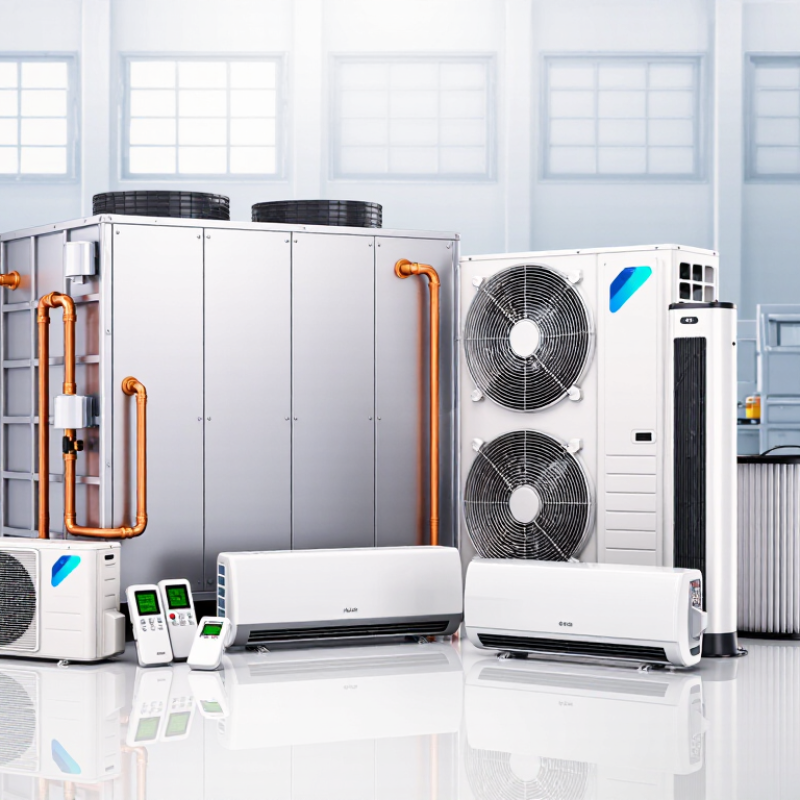
An affordable HVAC system in China is not simply the unit with the lowest purchase price. It should balance equipment cost, energy use, installation quality, and maintenance access. A practical evaluation includes cooling capacity, seasonal efficiency, noise levels, and operating conditions. For example, a properly sized system can cool a 30-square-meter room without excessive cycling. That matters during humid summer months. Cheap equipment may save money initially, but weak insulation or inefficient compressors can increase electricity bills. The cheapest quote often looks attractive. It may not stay affordable.
Buyers should also examine material quality, control accuracy, spare-part availability, and warranty terms. Reliable manufacturers normally provide clear performance data and documented testing. Installation is equally important because poor pipe connections can cause refrigerant loss, vibration, or reduced cooling. My experience is that unclear specifications create more risk than moderate price differences. Still, energy ratings are not the whole story. Local climate, building design, and technician skill can change real-world performance.
Tips: Request a complete quotation with equipment, installation, transport, and service costs. Compare several capacity-matched systems, not only their prices. Ask how quickly common parts can be supplied. Check whether the warranty covers labor and major components. Inspect sample units when possible. A showroom can mislead. Review technical documents and customer feedback carefully, while admitting that no system performs perfectly in every building.
China’s HVAC manufacturing market is organized around clusters, not one uniform supplier base. Large factories handle compressors, heat exchangers, controls, and complete systems. Smaller plants often specialize in assembly, duct units, or private-label production. This structure helps explain lower prices, but it also creates uneven quality.
The International Energy Agency estimates global air-conditioner ownership could rise from 1.6 billion units in 2016 to 5.6 billion by 2050. China’s production network is built for that scale. China Customs trade statistics recorded more than 60 million exported air-conditioning units in 2023. Coastal manufacturing zones usually offer stronger logistics and component access. Inland factories may provide lower labor costs. Delivery can be less predictable.
A credible supplier should provide efficiency test reports, refrigerant details, factory inspection records, and warranty procedures. Check whether the quoted price includes controls, packaging, certification, and spare parts. Cheap equipment can become expensive when installation instructions are unclear. The International Energy Agency also stresses that efficiency standards strongly influence future cooling demand. A low purchase price is not automatically a low operating cost.
China’s top ten budget manufacturers may therefore represent different business models. Some are integrated producers. Others depend on regional suppliers or trading partners. This distinction matters. My practical experience suggests that a factory visit, sample test, and independent inspection reveal more than a polished catalogue. Even then, no sourcing decision is perfectly risk-free.
China’s affordable HVAC sector is broad, but low price alone does not prove value. The National Bureau of Statistics reported approximately 248.9 million room air conditioners produced in China in 2023. This scale supports competitive component sourcing and efficient factory production. The International Energy Agency’s The Future of Cooling warns that global cooling electricity demand could triple by 2050. Efficiency matters.
Profile One represents compact split-system specialists for apartments and small shops. Profile Two focuses on inverter compressors and steady operation at partial load. Profile Three supplies budget rooftop units for workshops and retail spaces. Profile Four builds air-source heat pumps for mild winter regions. Profile Five serves export distributors with simplified installation kits. Profile Six concentrates on modular commercial systems, where replacement access reduces service time. Profile Seven offers ceiling cassette units for restaurants and clinics. Profile Eight produces ducted systems for compact offices. Profile Nine targets agricultural and light-industrial cooling. Profile Ten combines heat recovery with lower-GWP refrigerants.
These profiles should be compared through measurable evidence, not catalogue language. Check seasonal efficiency, sound levels, operating temperature ranges, and compressor warranty terms. Ask for factory test records and compliance with applicable GB or ISO requirements. The 2023 UNEP Global Cooling Watch report projects cooling demand could more than triple by 2050. That makes repairability increasingly important. A cheap unit with unavailable controls can become expensive within one summer. Price rankings are imperfect. Installation quality, local spare parts, and technician training often decide the real cost. Perform site calculations before selecting capacity. Oversizing remains a common mistake.
| Rank | Anonymous Manufacturer Profile | Primary HVAC Focus | Typical Product Range | Common Refrigerants | Affordability Advantages | Typical Efficiency Positioning | Customization Capability | Common Export Compliance | Suitable Buyer Type |
|---|---|---|---|---|---|---|---|---|---|
| 1 | Profile A — Residential Split-System Specialist | Wall-mounted split air conditioners and heat-pump units | Approximately 0.75–3.5 refrigeration tons; cooling and heating models | R32 and R410A, depending on model and target market | High-volume production, standardized components, and simplified cabinet designs | Basic to mid-range efficiency models designed for cost-sensitive residential projects | Private labeling, voltage selection, control-panel changes, packaging, and language customization | CERoHSISO 9001 where applicable | Importers, distributors, apartment projects, and budget housing developments |
| 2 | Profile B — Light Commercial Unit Producer | Ceiling cassette, concealed duct, and floor-ceiling air conditioners | Approximately 3.5–12 refrigeration tons | R32 or R410A, subject to regional regulations and product design | Shared platforms across multiple capacities reduce tooling and maintenance costs | Mid-range efficiency suitable for retail, offices, restaurants, and small commercial spaces | Panel color, controller type, drain-pump configuration, and electrical specifications | CEEMCLVD for applicable European-market products | Commercial contractors, wholesalers, and small-business facility owners |
| 3 | Profile C — Heat Pump and Hydronic Equipment Supplier | Air-source heat pumps for domestic hot water, heating, and cooling | Approximately 5–30 kW thermal output for residential and light-commercial applications | R32, R290, or R410A, depending on model and safety requirements | Factory assembly of monobloc systems and modular components lowers installation complexity | Often positioned around seasonal efficiency and low-temperature heating performance | Water-side connections, operating temperature range, controller language, and casing design | CEERPRoHS where required by destination market | Heating distributors, residential developers, and renewable-energy installers |
| 4 | Profile D — Portable and Window AC Manufacturer | Portable air conditioners, window units, and compact cooling equipment | Approximately 7,000–14,000 BTU/h for portable and window applications | R290, R32, or R410A according to product generation and market rules | Compact product architecture, low installation requirements, and economical logistics | Entry-level to mid-range efficiency for seasonal or supplemental cooling | Control interface, exhaust-kit configuration, plug type, wheels, and retail packaging | CEUKCAETL depending on destination market | Online retailers, seasonal distributors, rental properties, and emergency cooling suppliers |
| 5 | Profile E — Evaporative Cooling Equipment Maker | Evaporative air coolers and industrial spot-cooling equipment | Residential portable models through large-area commercial cooling units | Does not use a mechanical refrigerant circuit in standard evaporative designs | Low compressor content, reduced electricity consumption, and simple maintenance structure | Energy use is commonly lower than compressor-based cooling, subject to climate conditions | Tank size, fan speed, water-pump specification, wheels, filters, and control systems | CERoHSEMC where applicable | Warehouses, workshops, outdoor work areas, agricultural facilities, and dry-climate users |
| 6 | Profile F — Fan Coil and Air-Handling Component Supplier | Fan coil units, air handlers, ventilation modules, and replacement assemblies | Small-room fan coils through commercial air-handling modules | Usually connected to chilled-water or hot-water systems rather than containing a refrigerant circuit | Simple mechanical construction, modular coil options, and competitive sheet-metal fabrication | Performance depends on coil design, fan motor type, airflow, and system water temperature | Coil rows, casing dimensions, motor voltage, filter type, drain-pan design, and airflow direction | CEISO 9001 and project-specific testing documentation | HVAC installers, building-services contractors, hotels, and retrofit projects |
| 7 | Profile G — VRF and Multi-Split OEM Supplier | Multi-split and variable-refrigerant-flow equipment for larger buildings | Small multi-zone systems through multi-module commercial installations | R410A or R32, depending on the platform and destination-market requirements | OEM production, shared outdoor-unit platforms, and volume purchasing of compressors and controls | Mid-range to high-efficiency systems with inverter compressor technology | Indoor-unit styling, communication protocols, controller languages, and system combinations | CEEMCLVD where applicable | Regional HVAC distributors, engineering firms, and multi-zone commercial projects |
| 8 | Profile H — Rooftop and Packaged Unit Manufacturer | Packaged rooftop units, packaged heat pumps, and integrated commercial systems | Approximately 3–30 refrigeration tons for commercial applications | R32, R410A, or other market-approved refrigerants according to design | Factory-integrated refrigeration and air-side components reduce field assembly work | Standard efficiency configurations with optional economizer and inverter packages | Airflow direction, heating options, economizers, filters, electrical supply, and control interfaces | CEERPAHRI or local certification where required | Retail buildings, workshops, warehouses, restaurants, and modular construction projects |
| 9 | Profile I — Ventilation and Energy-Recovery Supplier | Fresh-air ventilators, heat-recovery ventilators, and energy-recovery ventilators | Residential units through commercial ventilation systems with larger airflow rates | Standard ventilation products may not use refrigerant; integrated units may use R32 or R410A | Modular fans, standardized heat exchangers, and compact installation formats | Energy-saving performance is mainly associated with fan efficiency and heat-recovery effectiveness | Airflow capacity, heat-exchanger material, filter grade, casing size, sensors, and controls | CERoHSEMC where applicable | Residential developers, schools, offices, hotels, and indoor-air-quality contractors |
| 10 | Profile J — Refrigeration and Cold-Climate HVAC Supplier | Condensing units, cold-room systems, air conditioners, and low-temperature heat pumps | Small commercial refrigeration through light-industrial HVAC applications | R290, R32, R404A alternatives, or other refrigerants subject to application and regulation | Application-specific packages, broad component sourcing, and flexible low-volume customization | Efficiency varies significantly with ambient temperature, load profile, and compressor selection | Compressor brand selection, control logic, low-ambient kits, enclosure design, and voltage options | CERoHSISO 9001 where applicable | Cold-chain businesses, food retailers, agricultural facilities, and specialist HVAC distributors |
Comparing cheap HVAC systems requires more than reading the factory quotation. The International Energy Agency reports that air conditioning and electric fans consume about 10% of global electricity. Efficiency therefore affects operating cost, not just purchase price. Check rated cooling capacity, EER, COP, and seasonal efficiency under the same test conditions. Ask for complete laboratory reports, not cropped screenshots.
Certifications need careful interpretation. ISO 9001 indicates a quality management system, but it does not guarantee quiet operation or long compressor life. CCC supports access to the Chinese market, while CE supports certain European market requirements. Neither replaces product-level performance testing. Independent verification through recognized testing laboratories or certification directories adds stronger evidence. Inspect serial-number traceability, pressure-test records, insulation thickness, and sample units. Small details matter.
Pricing should include freight, duties, installation, controls, spare parts, and warranty response time. The U.S. Department of Energy notes that higher-efficiency equipment can reduce energy use, but actual savings depend on climate, sizing, and maintenance. A low factory price may hide thin copper tubing or limited after-sales support.
I have seen attractive quotations become expensive after one unavailable control board. That lesson is uncomfortable. Request a five-year total-cost estimate, and challenge every assumption. Industry reports offer averages, not promises.
Importers should judge cheap HVAC systems by lifetime value, not purchase price alone.
The International Energy Agency’s The Future of Cooling reports that global space-cooling energy demand could more than triple by 2050. Efficiency is therefore a commercial concern, not merely an environmental preference. Check rated capacity, seasonal efficiency, standby consumption, and performance at the destination’s highest outdoor temperature. A unit that struggles at 40°C may create expensive service calls.
That matters. Request laboratory test reports, refrigerant specifications, electrical ratings, and applicable safety certifications before ordering. The UNEP 2023 Global Cooling Watch also warns that cooling demand may more than triple by 2050, increasing pressure on efficient equipment and lower-impact refrigerants. Verify that local technicians can legally handle the selected refrigerant.
Spare boards, fan motors, filters, and compressors should be available for several years. A low invoice can still be costly.
End users need practical details. Measure the room, insulation, window exposure, and expected occupancy instead of copying a neighbor’s capacity. Importers should compare warranty length, response time, packaging quality, minimum order quantities, and documentation accuracy. Independent inspection before shipment is worth considering.
Still, even inspection is not perfect. Real performance depends on installation, airflow, cleaning, and voltage stability. Ask for commissioning procedures and maintenance intervals. Cheap systems become reasonable only when efficiency data, service access, and operating conditions are transparent.