
Skip to content

Top Flat Wiper Suppliers for Global Buyers?

Choosing the right Flat Wiper supplier requires more than comparing unit prices. Global buyers must examine wiping performance, rubber compound quality, connector compatibility, production consistency, and after-sales support. A blade may look identical in a product photograph. Its performance can differ sharply during heavy rain, freezing weather, or dusty highway driving.

Industry reports provide useful direction. Grand View Research, Fortune Business Insights, and Mordor Intelligence all identify automotive wipers as a steady aftermarket and original-equipment segment. However, their market estimates differ. Their research scopes, regional coverage, and product definitions are not identical. This matters. A buyer should not treat one forecast as absolute truth. The reports consistently point toward higher demand for aerodynamic, frameless, and vehicle-specific wiper designs.

Valeo executive Marc Vrecko has described the central issue clearly: “Visibility is a key element of road safety.” That principle gives supplier evaluation a practical foundation. Reliable manufacturers should show test records, traceable materials, controlled packaging, and verified fitment data. They should also explain how their Flat Wiper performs after repeated wiping cycles, not only when new.

The strongest suppliers combine engineering discipline with responsive communication. They can provide samples quickly. They can document quality checks. They can adjust private-label packaging without weakening product control. Small details matter, including the adapter locking sound and the pressure across a curved windshield.

Price still matters. It should not lead the decision alone. A cheaper blade can create higher return rates, customer complaints, and hidden logistics costs. This overview examines leading Flat Wiper suppliers for global buyers, while recognizing one uncomfortable truth: supplier rankings can change as factories, materials, and regional demand shift.
Top Flat Wiper Suppliers for Global Buyers?

What Flat Wipers Are and Why Global Buyers Choose Them

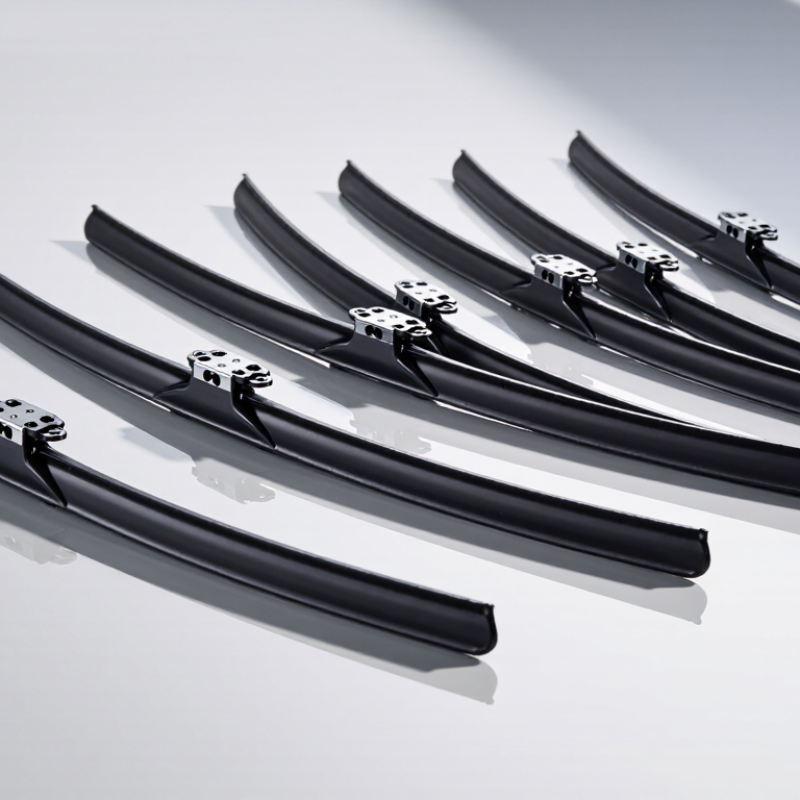
Flat wipers use a single flexible beam instead of several exposed metal links. Their rubber blade sits against the windshield through embedded spring steel. A low-profile spoiler helps maintain contact when air moves across the glass. The design looks simple, but its pressure distribution requires careful engineering.

Global buyers choose flat wipers for practical reasons. Their slim shape creates less wind noise and leaves fewer areas for ice, dust, or leaves to collect. Even pressure can produce a cleaner wipe across curved windshields. OICA recorded 93.5 million motor vehicles produced worldwide in 2023. That scale increases demand for compact, standardized replacement components. Flat designs also reduce package volume, which can simplify warehouse handling and export planning.

They are not universally better. Very cold regions may expose weaknesses when packed snow stiffens the blade. Fitment can also fail if the adapter does not match the vehicle arm. A buyer should verify length, connector type, curvature, and pressure performance before placing a large order. Fortune Business Insights estimated the global automotive windshield wiper market at USD 7.38 billion in 2023, showing strong but competitive demand. Field testing still matters more than a polished specification sheet. Wipers face rain, grit, sunlight, and repeated dry friction. Small design errors become visible quickly.

Key Criteria for Evaluating Flat Wiper Suppliers

Key Criteria for Evaluating Flat Wiper Suppliers

Global scale makes supplier selection more demanding. OICA reported 93.5 million motor vehicles produced worldwide in 2023. This volume creates intense pressure on consistency, delivery, and replacement support. A capable flat wiper supplier should provide batch records, production capacity, and stable lead times. Ask for evidence. Do not rely on catalog photographs.

Material performance deserves close inspection. Request rubber compound details, temperature testing, ozone resistance, and salt-spray results. The ACEA Vehicles on European Roads report recorded more than 249 million passenger cars in the European Union in 2022. That aging vehicle population increases demand for durable replacement blades. Suppliers should also verify adapter compatibility across different arm systems. Fit matters.

Quality systems reveal operational discipline. Check whether the factory follows ISO 9001 procedures and maintains traceable inspections. Samples should be tested for wiping clarity, pressure distribution, noise, and streaking after repeated cycles. A polished sample can mislead. I would compare samples from several production batches, not one shipment. Warranty terms, complaint response time, packaging strength, and export documentation also deserve written confirmation. A supplier that shares test limits openly is usually easier to evaluate, although transparency alone cannot replace independent inspection.

Key Criteria for Evaluating Flat Wiper Suppliers

This reference scoring model highlights the criteria global buyers commonly prioritize when comparing flat wiper suppliers. Product quality and fitment reliability receive the greatest weighting, followed by delivery capability, compliance, pricing, customization, and after-sales support.

Leading Flat Wiper Supplier Profiles by Market Strength

Top Flat Wiper Suppliers for Global Buyers

Leading flat wiper suppliers differ by market strength, not only by price. OICA reported 93.5 million motor vehicles produced worldwide in 2023. That scale rewards suppliers with strong tooling, testing, and regional inventory. OE-integrated manufacturers usually provide precise connector fit, controlled rubber compounds, and documented validation. Their supply processes often suit buyers requiring stable programs and long production cycles. However, their minimum orders can challenge smaller distributors.

Regional private-label converters offer a different advantage. They combine multiple adapter systems, local packaging, and flexible order quantities. Their strength is speed. A buyer may receive samples within days, while larger programs require deeper audits. Useful checks include salt-spray results, wipe-cycle testing, temperature exposure, and batch traceability. ISO 9001 certification helps, but it does not prove blade performance by itself. That distinction is often missed.

Aftermarket-focused suppliers compete through broad vehicle coverage and disciplined SKU management. S&P Global Mobility’s vehicle-parc research shows that older vehicles remain important in many mature markets, supporting replacement demand beyond new-car sales. Suppliers serving this segment need accurate fitment data, clear installation instructions, and packaging that survives humid warehouses. E-commerce specialists can add strong catalog visibility and fast fulfillment. Yet low prices may hide inconsistent adapters or weak quality records. My own buyer reviews would give more weight to repeat test results than attractive product photos. Small details matter.

Comparing Product Quality, Certifications, and Customization Options

Global buyers should judge flat wiper suppliers through measurable evidence, not catalog images. According to Fortune Business Insights, the global automotive wiper system market was valued at about USD 7.4 billion in 2023. This scale increases pressure on suppliers to deliver consistent rubber compounds, stable spring tension, and accurate frame geometry. During sample checks, inspect wiping edges under dry and wet conditions. Small gaps can reveal poor extrusion control.

Product quality also depends on documented systems. ISO 9001 supports process consistency, while IATF 16949 is more relevant for automotive production. Certificates alone are not enough. Buyers should verify certificate scope, audit dates, laboratory records, and batch traceability. SGS research on automotive supply chains highlights testing and traceability as important risk controls. Ask for salt-spray results, ozone-resistance data, UV-aging tests, and low-temperature performance. One overlooked detail is connector fit. A perfect blade still fails if the adapter loosens.

Customization can include length, spoiler shape, rubber hardness, packaging, and connector design. MarketsandMarkets reports continued growth in automotive aftermarket demand, which makes regional fitment data increasingly valuable. Suppliers should provide drawings, tolerance tables, and pilot samples before mass production. However, customization may reduce interchangeability and raise tooling costs. That trade-off deserves honest discussion. I would also question impressive test figures without raw conditions. Temperature, speed, glass curvature, and test cycles can change the result. Good suppliers explain those limits clearly.

How to Select the Right Flat Wiper Supplier for Your Needs

Choosing the right flat wiper supplier requires more than comparing unit prices. Begin with vehicle coverage, blade dimensions, adapter compatibility, rubber formulation, and packaging requirements. A reliable supplier should provide clear technical data, stable production capacity, and documented quality controls. Ask for samples before placing a large order. Check edge pressure, wiping noise, streak formation, and fit on several windshield shapes.

Real-world testing matters. Test the blades in heavy rain, light mist, dust, and cold storage conditions. Inspect the frame after repeated use. Small details, such as connector strength and protective film quality, can affect customer satisfaction. Request production samples from the same batch, not only showroom samples. Traceable inspection records also show whether the supplier manages quality consistently.

Tips: Compare complete landed costs, including packaging, testing, shipping, and possible defect rates. Confirm lead times in writing. Discuss replacement policies before problems occur. Ask how the supplier handles design changes and urgent orders. A low quotation may look attractive, but hidden rework costs can damage margins. I have found that communication quality often predicts delivery performance, although it is not a perfect measure. Independent testing is still necessary. Be careful with impressive claims that lack measurable evidence. Choose a supplier that answers technical questions directly and accepts reasonable verification.