Skip to content

Top Armature Shaft Manufacturers and Suppliers Worldwide

Selecting the right Armature Shaft manufacturer can influence motor efficiency, service life, noise, and maintenance costs. This guide examines leading manufacturers and suppliers serving markets worldwide, from precision motor producers to specialized machining companies.

A dependable supplier should provide more than a polished product catalogue. Material traceability, controlled heat treatment, accurate balancing, and consistent shaft concentricity deserve close attention. Typical applications include automotive motors, power tools, pumps, industrial equipment, and household appliances. Each sector imposes different requirements for diameter, hardness, surface finish, and fatigue resistance.

Details matter. Trust takes evidence.

Experienced buyers often request inspection reports, dimensional records, sample testing, and production references before approving a supplier. ISO-based quality systems can support consistency, but certification alone does not guarantee practical performance. Factory capability, engineering communication, packaging quality, and response speed also reveal a supplier’s reliability.

This overview considers manufacturers through technical expertise, production capacity, quality controls, customization ability, and international support. It also recognizes a less comfortable reality: supplier information can change, and public claims may not tell the whole story. Some companies excel at high-volume production but struggle with complex designs. Others deliver excellent prototypes but lack stable scaling.

A careful comparison remains necessary. Small errors matter.

The featured companies should therefore be evaluated against actual drawings, operating conditions, tolerances, and expected service life. Independent verification remains valuable when failure could cause costly downtime. With practical evidence and clear specifications, buyers can identify an Armature Shaft partner that fits both immediate production needs and long-term engineering goals.

Top Armature Shaft Manufacturers and Suppliers Worldwide

Armature Shafts: Definition, Function, and Core Design Features

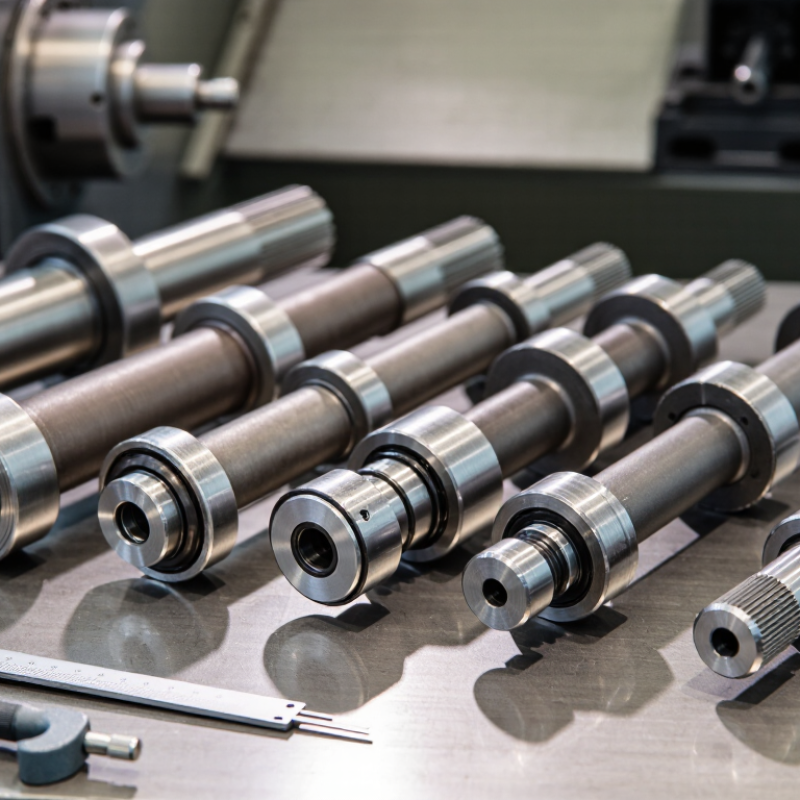
An armature shaft is the rotating steel core that carries an armature, commutator, fan, or drive gear. In brushed motors, it transfers electromagnetic torque to the mechanical load. Its centerline must remain stable under speed, heat, and repeated starting cycles.

The International Energy Agency reports that electric motor systems use roughly half of global electricity. This figure explains why shaft design affects more than mechanical reliability. A small imbalance can increase vibration, bearing wear, noise, and energy loss.

Core features include a precision-ground journal, controlled runout, suitable steel hardness, and a keyed or splined drive section. A shoulder may locate the armature accurately. A threaded end can secure a fan or coupling.

Material choice depends on torque, speed, and operating temperature. Low-carbon steel supports machining and case hardening, while alloy steel may improve fatigue resistance.

The U.S. Department of Energy identifies motor-system efficiency as a major industrial energy opportunity, making accurate shaft geometry commercially important. ISO 21940 balancing practices also provide a useful reference for rotor quality, though shaft requirements still depend on the complete assembly.

Tolerance alone is not enough. Surface finish, press-fit stress, and heat-treatment distortion can interact in unexpected ways. That is where many specifications become too optimistic.

Engineers should verify dynamic balance after assembly, not only inspect the shaft separately. Supplier records should include material certificates, hardness readings, dimensional reports, and traceable balancing results.

Key Materials and Manufacturing Processes for Armature Shafts

Armature shafts demand more than simple dimensional accuracy. They must resist torque, bending, vibration, and repeated thermal cycling. Medium-carbon steel is widely selected because it balances strength, machinability, and cost. Alloy steel may perform better under heavier loads. Stainless steel is useful where corrosion resistance matters, although it can increase machining difficulty and material expense.

Manufacturing usually begins with forged or drawn bar stock. Forging can refine the grain structure and improve fatigue resistance. Turning establishes the main diameter, while grinding creates precise bearing seats and smooth journal surfaces. Heat treatment, such as quenching and tempering, adjusts hardness without making the shaft excessively brittle. Some designs also require induction hardening on wear zones. Small errors matter here. Poor concentricity can create vibration, noise, and premature bearing damage.

Tips: Specify the torque, speed, duty cycle, and operating temperature before choosing material. Check shaft runout after grinding, not only after turning. Ask suppliers for hardness records, dimensional reports, and traceability documents. A polished surface is not automatically a reliable one. Surface finish, fillet radius, and transition design must work together. In practice, designers sometimes overemphasize hardness and overlook toughness. That choice deserves a second review, especially for compact motors with frequent starts and stops.

How to Evaluate Global Armature Shaft Manufacturers and Suppliers

Evaluating global armature shaft manufacturers requires more than comparing unit prices. Start with engineering evidence. Ask for material certificates, heat-treatment records, dimensional reports, and dynamic balancing results. A reliable supplier should explain steel grades, hardness ranges, runout limits, and surface-finish requirements in clear terms. Avoid vague claims.

Request a production sample before approving large quantities. Inspect journal diameters with calibrated micrometers. Check keyways, splines, concentricity, and end-face squareness. A shaft may look flawless but fail after repeated starts and stops. Ask how the manufacturer controls distortion after machining and heat treatment. Review inspection plans, corrective-action records, and traceability from raw bar to packed component. Certifications matter, but process discipline matters more.

Supplier evaluation should also cover practical performance. Confirm monthly capacity, backup equipment, packaging methods, export documents, and realistic lead times. Ask how urgent design changes are handled across time zones. Factory audits, technical video calls, and customer references can reveal gaps hidden by polished presentations. Cost deserves attention, yet a low quotation may exclude balancing, testing, tooling, or replacement support. I have seen sourcing teams overvalue a neat brochure. That mistake is easy to repeat. Require clear acceptance criteria and written responsibility for nonconforming parts. Small details often separate a dependable partner from a difficult one.

Major Industries and Applications Served by Armature Shaft Producers

Armature shafts support motion in many industries, from compact household appliances to heavy industrial equipment. Their design affects torque transfer, vibration, noise, and service life. Producers usually adjust shaft diameter, journal length, keyways, and commutator seating to match each motor platform.

Household appliance manufacturers use armature shafts in washing machines, mixers, vacuum cleaners, and cooling fans. These applications require quiet rotation and consistent balance at changing speeds. Automotive suppliers use them in starter motors, pumps, blowers, and small electric actuators. A shaft may face heat, dust, oil mist, and repeated start-stop cycles. Small dimensional errors can become noticeable during assembly.

Power tool producers demand hardened surfaces and accurate splines for drills, grinders, and saws. HVAC equipment relies on shafts that maintain stable rotation inside blowers and compressors. Medical equipment and laboratory devices often need clean machining, low runout, and traceable inspection records. Industrial automation adds another challenge: shafts must fit compact motors while surviving continuous operation.

Experienced producers combine turning, heat treatment, centerless grinding, balancing, and final measurement. They inspect critical journals with calibrated gauges, not visual checks alone. Material selection also depends on load, temperature, and corrosion exposure. A polished drawing may still miss a real assembly problem. Trial fitting and application feedback remain valuable. Not every specification is perfect on the first revision. Reliable suppliers document changes, review failure data, and communicate tolerances clearly across engineering and production teams.

Top Armature Shaft Manufacturers and Suppliers Worldwide - Major Industries and Applications Served by Armature Shaft Producers

Worldwide Supply Region Major Industries Served Typical Armature Shaft Applications Common Shaft Materials Typical Manufacturing Processes Key Engineering Requirements Relevant Standards and Quality Practices
East Asia Power tools, household appliances, automotive components, industrial automation, small electric motors Handheld drills, grinders, vacuum cleaners, fans, pumps, gearmotors, actuator assemblies Low-carbon steel Medium-carbon steel Alloy steel Stainless steel Cold heading, turning, CNC machining, centerless grinding, knurling, splining, heat treatment and balancing High-volume repeatability, controlled runout, precise bearing seats, commutator fit, fatigue resistance and competitive unit cost ISO 9001 quality systems; dimensional inspection; surface-finish control; dynamic-balance testing; customer-specific drawings and control plans
South Asia Textile machinery, agricultural equipment, pumps, fans, material handling and general industrial motors Induction motors, centrifugal pumps, irrigation systems, textile spindles, conveyors and small generator assemblies Carbon steel Alloy steel Stainless steel Bar turning, CNC lathe machining, keyway milling, drilling, grinding, press fitting and selective hardening Load-bearing capacity, corrosion resistance where required, accurate keyways, concentricity and compatibility with standard bearings ISO 9001 practices; material certificates; hardness verification; gauge inspection; traceability for production batches
Southeast Asia Consumer electronics, cooling equipment, automotive systems, appliances and contract motor assembly Brush motors, brushless motor rotors, cooling fans, blowers, electric pumps and compact actuators Free-cutting steel Low-carbon steel Stainless steel Automatic turning, grinding, thread rolling, grooving, rotor assembly, balancing and automated dimensional inspection Compact geometry, low vibration, low noise, high surface quality, tight shaft-to-rotor fit and efficient mass production ISO 9001 systems; process capability monitoring; automated optical inspection; vibration and balance verification
Europe Industrial automation, automotive, robotics, medical equipment, renewable energy and precision machinery Servo motors, robotic joints, precision gearboxes, electric vehicle auxiliaries, medical pumps and wind-turbine subassemblies Case-hardening steel Quenched-and-tempered alloy steel Stainless steel Precision CNC turning, hard turning, cylindrical grinding, induction hardening, nitriding, spline production and balancing High dimensional accuracy, low geometric error, high fatigue strength, wear resistance, low vibration and documented process traceability ISO 9001 and sector-specific quality systems; geometric tolerancing; material traceability; non-destructive testing where specified
North America Aerospace support equipment, automotive, industrial machinery, power generation, defense-related equipment and pumps Starter motors, alternators, traction motors, industrial drives, compressors, pumps and high-duty motor assemblies Alloy steel Stainless steel Tool steel Titanium alloys for specialized designs Forging, CNC machining, milling, spline broaching, heat treatment, shot peening, grinding and dynamic balancing High torque capacity, impact resistance, service-life stability, accurate splines, controlled hardness and compliance with detailed engineering specifications ISO 9001 or equivalent quality systems; ASTM material references; dimensional reports; hardness testing; first-article and lot inspection
Latin America Mining, agriculture, food processing, HVAC, pumps, transportation equipment and general manufacturing Conveyor drives, agricultural pumps, ventilation systems, refrigeration motors, mixers and replacement motor components Carbon steel Alloy steel Stainless steel for hygienic or corrosive environments Conventional and CNC turning, keyway machining, welding repair where permitted, grinding, balancing and corrosion-protection treatment Robustness, ease of replacement, reliable bearing fits, resistance to dust and moisture, and compatibility with locally maintained equipment ISO-based quality practices; incoming material inspection; dimensional checks; surface-protection records; replacement-part verification
Middle East and Africa Oil and gas support equipment, water treatment, mining, construction, HVAC and electrical infrastructure Water pumps, drilling support equipment, cooling systems, hoists, compressors and heavy-duty industrial motors Alloy steel Stainless steel Corrosion-resistant steel Forged or bar-stock machining, turning, keyway and spline production, heat treatment, grinding, protective coating and balancing Resistance to heat, dust, humidity and corrosive media; high torque transmission; dependable sealing surfaces and extended service life ISO 9001 practices; material certificates; hardness and coating inspection; dimensional reports; application-specific testing
Global Aftermarket and Specialist Suppliers Motor repair, maintenance services, industrial distribution, equipment refurbishment and spare-parts supply Replacement armatures, rebuilt motors, legacy equipment, emergency repairs and low-volume custom shaft production Carbon steel Alloy steel Stainless steel Reverse engineering, CNC turning, grinding, keyway restoration, welding or metal repair when suitable, balancing and inspection Interchangeability, accurate reproduction of legacy dimensions, short lead times, repairability and verification against the original assembly Drawing and sample-based inspection; dimensional reports; material identification; runout measurement; electrical and mechanical assembly checks

Note: Material grades, tolerances, heat treatments and inspection requirements vary according to motor design, load, speed, environment, production volume and customer specifications.

Quality Standards, Customization, and Supply Chain Considerations

Top Armature Shaft Manufacturers and Suppliers Worldwide

Quality starts with measurable shaft performance, not polished brochures. IEC 60034-1 defines key requirements for rotating electrical machines, while ISO 9001 supports controlled production and traceability. Buyers should request material certificates, hardness results, dimensional inspection records, and dynamic-balancing data. Critical details include shaft diameter, keyway geometry, concentricity, surface finish, and allowable runout. Small errors can create vibration, bearing wear, and early motor failure.

Customization is often necessary. A supplier may adjust steel grade, heat-treatment depth, spline profile, or corrosion protection for a specific duty cycle. However, customization increases inspection points and tooling costs. A perfect drawing can still miss real operating conditions. Temperature, shock loads, lubrication, and installation errors deserve review. The U.S. Department of Energy’s Motor Systems Market Assessment reports that motor systems consume about 70% of industrial electricity, making efficiency-related reliability decisions commercially significant.

Supply continuity needs equal attention. The UNCTAD Review of Maritime Transport reports that shipping carries over 80% of global merchandise trade by volume. Port delays can therefore affect even small shaft orders. Strong suppliers provide approved material alternatives, safety-stock plans, batch traceability, and realistic lead-time updates. Dual sourcing helps, but it is not automatically safer. Different suppliers may interpret tolerances differently. A shared inspection plan, sample approval, and periodic supplier audits reduce that risk. Some procurement teams still focus too heavily on unit price. That is an expensive blind spot.

Article Source: