Top HVAC Air Conditioner Manufacturers Worldwide
Choosing the top HVAC air conditioner manufacturers worldwide requires more than comparing brand recognition. It demands practical evidence, engineering knowledge, and careful attention to changing market conditions. Reliable hvac air systems must perform steadily through heat waves, humid summers, and demanding commercial schedules. Their value appears in measurable details, including cooling efficiency, sound levels, filtration quality, service access, and expected operating life.
This overview examines leading manufacturers through a balanced professional lens. It considers residential, commercial, and industrial equipment, rather than treating every product as equal. Factory testing, published performance data, installer experience, warranty support, and customer feedback all matter. A quiet outdoor unit beside a bedroom window can reveal more than a polished brochure. So can a rooftop system that maintains stable temperatures across a busy office.
No list is flawless. Regional regulations, electricity costs, climate patterns, and distributor networks can change a brand’s real-world position. A respected manufacturer may offer excellent equipment but limited local support. Another may provide affordable units with weaker long-term efficiency. That difference deserves attention.
The companies discussed here have built reputations through technology, production scale, and professional service. Still, reputation should not replace verification. Buyers and contractors should confirm current specifications, refrigerant requirements, maintenance needs, and qualified installation options before deciding. Some comparisons remain imperfect because product ranges differ between countries. That limitation is worth acknowledging. The strongest choice is rarely the loudest name; it is the system that fits the building, budget, climate, and people using it.
Global HVAC Market Structure and Manufacturer Categories
Top HVAC Air Conditioner Manufacturers Worldwide
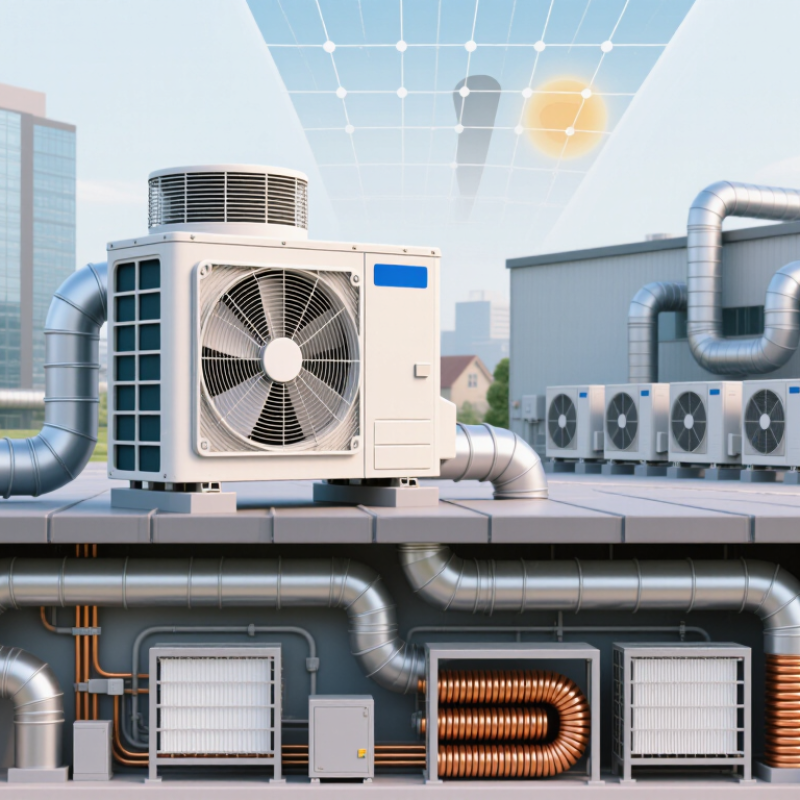
The global HVAC market is divided by equipment type, customer need, and regional climate. Residential manufacturers mainly produce split systems, window units, and compact heat pumps. Commercial suppliers focus on rooftop units, variable refrigerant flow systems, and packaged equipment. Industrial manufacturers usually serve factories, hospitals, data centers, and large public buildings.
The market also includes original equipment manufacturers, regional producers, contract assemblers, distributors, and specialist service companies. Large manufacturers often invest in testing laboratories, energy research, and long-term parts support. Regional companies may respond faster to local building codes and weather conditions. In practice, manufacturing strength is not only about factory size. It also depends on compressor quality, refrigerant management, controls, installation training, and after-sales service. This structure is useful, but not perfect. Some companies fit several categories at once, which makes direct comparison difficult.
Tips: Compare seasonal efficiency, noise levels, warranty terms, local technicians, and spare-parts availability. Check the full operating cost, not only the purchase price. A system that looks affordable may consume more energy in humid climates. Site measurements matter too. A poorly sized unit can cycle frequently, create uneven temperatures, and fail earlier. Independent certification and transparent technical data improve purchasing confidence, although documents can still contain gaps. Experiences from installers and facility managers often reveal practical weaknesses that brochures omit.
Leading Air Conditioner Manufacturers by Region
Leading Air Conditioner Manufacturers by Region
Regional leadership in air conditioning reflects climate, housing design, and industrial capacity. The International Energy Agency reported about 2 billion cooling units worldwide in 2016. It projects roughly 5.6 billion units by 2050. East Asia remains the largest manufacturing and consumption center, supported by dense supply chains and strong residential demand.
North American manufacturers focus heavily on ducted systems, replacement equipment, and connected controls. Europe places greater emphasis on seasonal efficiency, refrigerant transition, and reversible heat-pump technology. The European Environment Agency reports that heating and cooling represent a major share of building energy use, making efficiency standards commercially important. Regulation shapes products here.
South Asia and Southeast Asia are expanding quickly. Hotter urban neighborhoods, rising incomes, and unreliable grid conditions are changing purchasing decisions. The Middle East favors equipment designed for extreme outdoor temperatures and dusty environments. Simple durability matters. The IEA warns that cooling electricity demand could more than triple by 2050 without stronger efficiency policies. That forecast should challenge manufacturers to improve part-load performance, not only headline capacity.
The regional map is not neat. Production leadership does not always equal installation leadership. Some export centers still face uneven service networks, limited technician training, and weak end-of-life recovery. Those gaps deserve more attention. UNEP’s Global Cooling Watch highlights efficiency improvements and low-emission cooling as essential to meeting future demand. Manufacturers that combine local testing, transparent performance data, and dependable maintenance will be better positioned across regional markets.
Factors for Comparing HVAC Brands and Product Lines
Top HVAC Air Conditioner Manufacturers Worldwide
Comparing HVAC brands requires more than reading a high efficiency number. The International Energy Agency reports that space-cooling energy demand has more than tripled since 1990. It may triple again by 2050 without stronger efficiency measures. Therefore, compare seasonal performance, not only laboratory capacity. Check SEER2, EER2, HSPF2, or regional equivalents. Also examine performance at outdoor temperatures near your actual climate. A system rated at 35°C may behave differently during a 42°C heatwave.
Product lines should be judged as complete systems. Confirm indoor and outdoor unit compatibility, refrigerant type, sound levels, filtration, controls, and repair access. The U.S. Department of Energy emphasizes tested efficiency and correct installation as major performance factors. Warranty length matters, but local technician training matters more. A long warranty is not useful if parts require weeks to arrive. Field assessments often reveal this uncomfortable gap. Energy Star’s residential cooling guidance also stresses proper sizing, airflow, and duct sealing. Oversized equipment can cycle too quickly and leave rooms humid.
Tips: Request certified test data, not marketing estimates. Compare annual energy cost using your utility rate. Ask for maintenance pricing and parts availability. Inspect condensate drainage. It is easy to overvalue smart controls. They cannot repair poor sizing or leaking ducts. My own comparison would include a three-year service record, though that evidence is often incomplete. No score is perfect.
Industry Trends Shaping the Future of Air Conditioning
Top HVAC Air Conditioner Manufacturers Worldwide
Industry Trends Shaping the Future of Air Conditioning
Air conditioning is moving beyond simple cooling. Inverter compressors now adjust output room by room, reducing energy waste during mild weather. Heat pump systems are gaining attention because they can provide heating and cooling from one unit. Lower-impact refrigerants are also changing equipment design. However, efficiency labels can mislead when installation quality is poor. A badly sized system may cycle frequently, create uneven temperatures, and consume more electricity than expected.
Smart controls are becoming practical tools, not decorative features. Sensors can track occupancy, humidity, outdoor temperature, and filter conditions. A facility manager may receive an alert before a blocked filter restricts airflow. In apartments, zoning can cool occupied rooms while unused spaces remain at a higher setting. Quiet operation matters too. Tenants notice compressor vibration at night, especially in compact bedrooms.
Indoor air quality will remain a major influence. Better filtration, ventilation control, and humidity management can support healthier interiors, but none works without regular maintenance. This is where the industry still needs more honesty. Connected equipment cannot replace trained technicians or clear service records. Data may also be incomplete, especially in older buildings. Manufacturers and contractors should publish realistic performance figures, explain refrigerant handling requirements, and design equipment for repair rather than early replacement. The most useful progress may be less dramatic: accurate load calculations, sealed ducts, clean coils, and controls that people can actually understand.