
2026 Best Cheap HVAC Systems for Global Buyers?
For global buyers, choosing cheap HVAC systems is not simply a search for the lowest sticker price. A small split air conditioner may cost less than a ducted heat pump, yet installation quality, electricity rates, climate, and replacement parts can change the final cost. A unit that performs well in a dry apartment may struggle in a humid coastal home.
HVAC engineer and building-science educator Ross Trethewey has said, “Efficiency is a system decision, not just a product decision.” That principle guides this review. We examine cooling capacity, seasonal efficiency, warranty coverage, refrigerant standards, voltage compatibility, noise, and local servicing. These details matter when a compressor fails during a 40°C summer or when a replacement filter is unavailable for weeks.
The word “cheap” also needs care. A low-priced unit can become expensive through high energy use, poor insulation, oversized capacity, or difficult maintenance. Conversely, a modest system with correct sizing may deliver reliable comfort for years. There is no perfect global choice.
This guide compares practical options for apartments, small offices, retail spaces, and budget-conscious homes. It considers widely available brands and realistic ownership costs, not promotional prices alone. Some recommendations remain imperfect because markets differ sharply. Import duties, installer skills, grid reliability, and climate data can vary between neighboring countries.
Readers should verify local regulations and obtain a professional load calculation before purchasing. A cheaper system is useful only when it fits the building, the climate, and the buyer’s long-term budget.
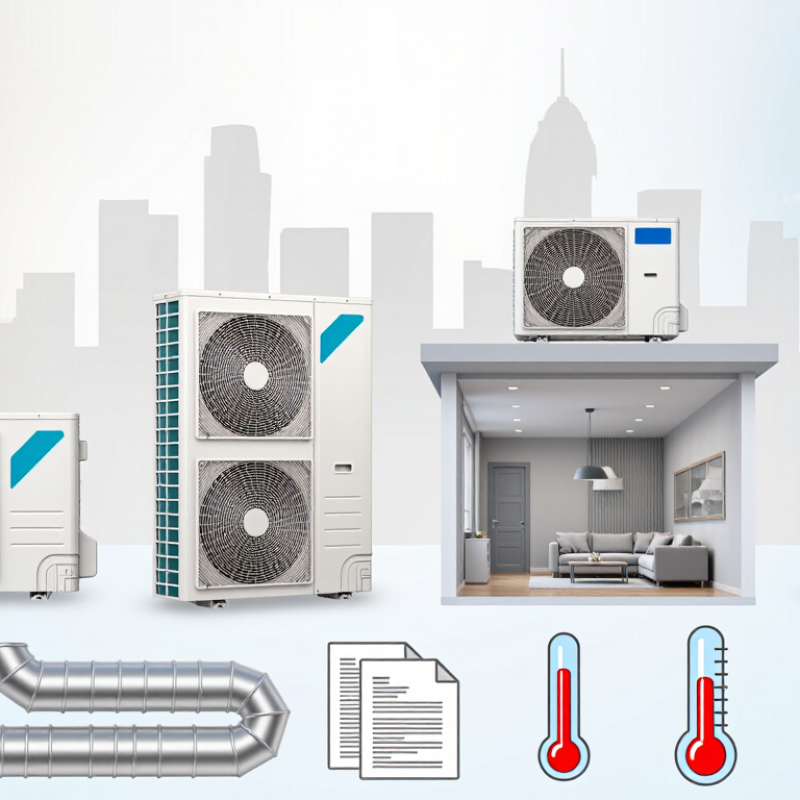
What Makes an HVAC System Affordable for Global Buyers in 2026
For global buyers in 2026, an affordable HVAC system means more than a low purchase price. It must reduce energy use, installation risks, and future service costs. The UNEP 2023 Global Status Report for Buildings and Construction states that buildings consume about 30% of global final energy. Cooling and heating efficiency therefore affects household budgets and national energy demand.
Climate is the first practical filter. A system designed for a mild region may perform poorly in humid tropics or freezing winters. Buyers should check seasonal efficiency ratings, operating temperature ranges, voltage, and refrigerant requirements. The International Energy Agency reports that heat pump sales grew strongly in recent years, especially in Europe. However, performance still depends on correct sizing. An oversized unit may cycle frequently. That wastes energy and reduces comfort.
Serviceability matters greatly.
A durable system needs accessible filters, standard parts, clear fault codes, and trained technicians nearby. Import duties and shipping can also change the real price. In remote markets, a cheaper unit may become expensive after one unavailable component. I would compare five-year ownership costs, not only the invoice. Include electricity, maintenance, installation materials, and probable repairs. This approach is imperfect, because energy prices and weather vary. Still, it is more reliable than judging affordability from efficiency labels alone. Payback claims should be checked against local tariffs and actual operating hours, not promotional assumptions.
| System Type | Typical Cooling Capacity | Typical Heating Capability | Typical Installed Cost (USD, 2026 Indicative Range) |
Typical Efficiency Metric | Best Climate and Application | Key Affordability Advantages | Main Limitations | Global Buyer Checklist |
|---|---|---|---|---|---|---|---|---|
| Window Air Conditioner | 1.5–3.5 kW approximately 5,000–12,000 Btu/h |
Usually none; some models provide limited electric resistance heating | Approximately $350–$1,200 | Energy Efficiency Ratio (EER) commonly about 9.0–12.0 | Small rooms, apartments, hot climates, and buildings without central ductwork |
Lowest upfront cost Simple installation, no refrigerant piping, and relatively easy replacement |
Higher noise, reduced window access, limited room coverage, and no whole-home zoning | Check window dimensions, voltage, plug type, safety requirements, and local electrical standards |
| Portable Air Conditioner | 2.0–4.1 kW approximately 7,000–14,000 Btu/h |
Normally none; heating versions may use electric resistance elements | Approximately $400–$1,300 | Portable units are often rated by Combined Energy Efficiency Ratio (CEER); commonly about 6.5–10.0 | Rental housing, temporary cooling, and locations where permanent installation is restricted | Movable between rooms, minimal installation, and suitable for short-term use | Usually less efficient and noisier than comparable window or mini-split systems | Compare standardized capacity ratings, exhaust-hose design, condensate management, and local noise limits |
| Single-Zone Ductless Mini-Split | 2.0–7.0 kW approximately 7,000–24,000 Btu/h |
Reverse-cycle heat pump; commonly suitable for mild to moderately cold conditions | Approximately $1,200–$4,500 | Seasonal Energy Efficiency Ratio 2 (SEER2) commonly about 16–25; heating performance varies by model and climate | One room or a small open-plan area; efficient cooling in homes without ducts |
Strong value over time High efficiency, low distribution losses, quiet indoor operation, and room-by-room control |
Requires qualified refrigerant-line installation; an outdoor unit and wall penetration are needed | Confirm local installer skills, pipe-length limits, defrost performance, voltage, and refrigerant regulations |
| Multi-Zone Ductless Mini-Split | 4.0–14.0 kW total approximately 14,000–48,000 Btu/h |
Reverse-cycle heat pump for several indoor zones | Approximately $3,500–$10,000 | SEER2 commonly about 16–23; heating efficiency depends on outdoor temperature and configuration | Multi-room homes, small offices, and buildings where installing ducts is impractical | One outdoor unit can serve several rooms; zoning can reduce unnecessary operation | Higher initial cost and more complex service than a single-zone system | Check minimum and maximum connected capacity, simultaneous heating/cooling limitations, and spare-parts availability |
| Ducted Split Air-Source Heat Pump | 5.3–17.6 kW approximately 18,000–60,000 Btu/h |
Reverse-cycle heating; cold-climate models can operate at sub-freezing outdoor temperatures | Approximately $4,500–$14,000, excluding major duct replacement | SEER2 commonly about 14–22; heating ratings may include HSPF2 and COP at specified temperatures | Whole-home cooling and heating where usable ductwork already exists | One integrated system, centralized filtration, and lower operating cost than electric resistance heating in many climates | Duct leakage, poor insulation, or incorrect sizing can significantly reduce efficiency | Inspect duct condition, verify airflow, request a heat-load calculation, and confirm backup-heating requirements |
| High-Efficiency Inverter Heat Pump | 2.5–12.0 kW approximately 9,000–41,000 Btu/h |
Variable-speed reverse-cycle heating with capacity modulation | Approximately $2,000–$8,000 | Variable-speed systems may achieve SEER2 above 20; heating efficiency is expressed using HSPF2 or COP | Homes needing both cooling and heating, especially in regions with long shoulder seasons | Lower cycling losses, improved comfort, and potentially lower energy use than fixed-speed systems | Higher purchase price and greater dependence on electronic controls and qualified service | Compare low-temperature capacity, operating limits, defrost strategy, warranty terms, and power-quality requirements |
| Packaged Rooftop or Packaged Outdoor Unit | 10.5–35.0 kW approximately 36,000–120,000 Btu/h |
Cooling-only, gas/electric, or reverse-cycle configurations are available | Approximately $7,000–$25,000 | Efficiency varies by configuration; commercial units are commonly compared using EER, IEER, or seasonal ratings | Small commercial buildings, retail spaces, and facilities requiring a single outdoor package | Factory-integrated equipment can simplify installation where rooftop infrastructure already exists | Higher lifting, structural, service, and replacement costs than residential systems | Check roof loading, crane access, local commercial codes, corrosion protection, and service-network coverage |
| Evaporative Cooler | Capacity depends heavily on airflow and outdoor conditions | Cooling only; no conventional heating function | Approximately $500–$4,000 for residential and light-commercial applications | Uses much less electricity than compressor-based cooling, but performance is not directly comparable to SEER | Hot, dry climates with low outdoor humidity and adequate ventilation | Low electricity demand, simple technology, and low operating cost in suitable climates | Unsuitable for humid climates; requires water, ventilation, and regular pad and pump maintenance | Evaluate local humidity, water quality, drainage, ventilation, and seasonal water restrictions |
Related Posts
-
China Top 10 Cheap HVAC Systems Manufacturers
-
How to Choose the Best Industrial HVAC Companies for Your Needs?
-
10 Best HVAC Equipment Suppliers for Global Buyers?
-
Why You Should Watch HVAC Videos for Home Energy Efficiency
-

How to Choose the Right Industrial HVAC Units for Your Business Needs?
-
Why Understanding the Parts of HVAC System is Essential for Homeowners?