10 Best Air Blenders for Global Buyers in 2026
Choosing the right air blender in 2026 requires more than comparing tank size and purchase price. Global buyers face different voltage systems, air-quality requirements, hygiene rules, and service conditions. A compact unit may perform well in a laboratory but struggle with continuous production. That difference matters.
Recent industry reports support this careful approach. Grand View Research identifies automation, process consistency, and energy efficiency as major trends across the industrial mixing equipment market. MarketsandMarkets also highlights stronger demand for hygienic, controllable, and application-specific blending systems. These findings suggest a practical shift. Buyers now expect measurable performance, not attractive brochures.
This guide evaluates ten leading air blender options for international purchasing teams. Each model is considered through operating pressure, usable capacity, material compatibility, mixing uniformity, cleaning access, noise, controls, and maintenance support. Stainless steel construction can be valuable in food and pharmaceutical environments, while corrosion-resistant finishes may suit aggressive ingredients. Compressed-air consumption also deserves attention. It can quietly increase operating costs.
Real conditions matter.
A blender that works smoothly with dry powder may perform poorly with sticky materials. Supplier documentation should confirm test results, spare-part availability, warranty coverage, and compliance with applicable local standards. Certifications should be verified directly, not assumed from a product photograph. This article uses published specifications and practical selection criteria, but some supplier data remain incomplete. That is worth acknowledging.
The best air blender is not always the largest or most expensive. It is the model that matches the material, production rhythm, facility utilities, and long-term service plan. Global buyers should test representative samples before committing to a high-volume order.
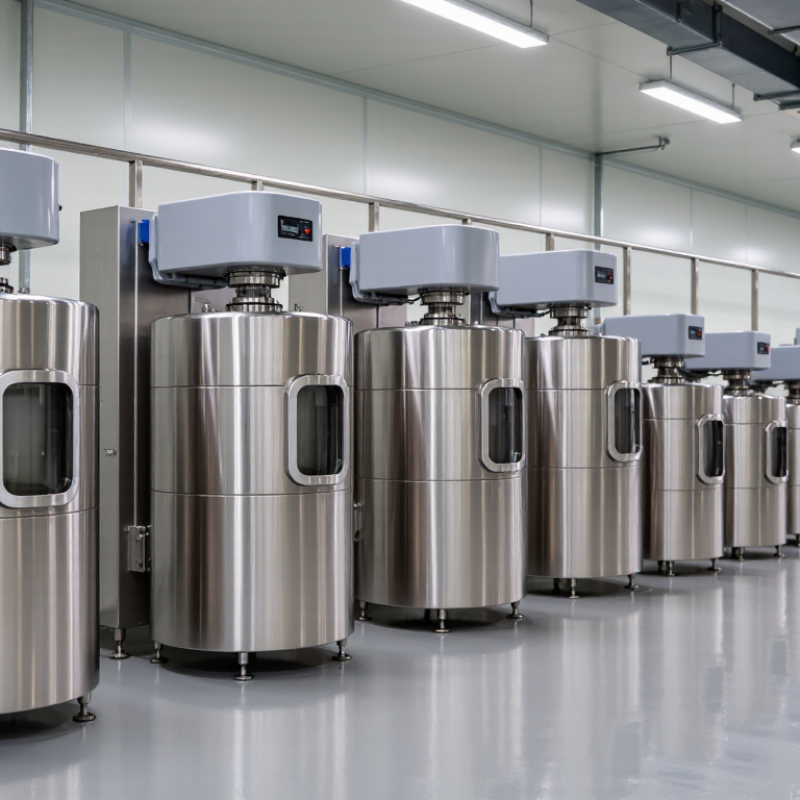
What Air Blenders Are and Why Global Buyers Need Them
10 Best Air Blenders for Global Buyers in 2026
What Air Blenders Are and Why Global Buyers Need Them
An air blender is a pneumatic mixing device for tanks, drums, and process vessels. It uses compressed air to circulate liquids, suspensions, or selected powders. Unlike an electric agitator, it can operate without a motor mounted near the vessel. This design may simplify installation in wet or space-limited areas. The term is not perfectly standardized. Some suppliers describe air-driven impellers, while others mean bubbling systems. Buyers must confirm the operating principle before comparing specifications.
Global demand is linked to practical production needs. The U.S. Department of Energy reports that compressed air can represent 10% to 15% of industrial electricity use. Poorly designed systems waste even more energy. Air quality also matters. ISO 8573-1 classifies particles, water, and oil in compressed air, helping buyers define suitable filtration. A food, chemical, or water-treatment application cannot treat these details as optional.
A useful review starts with viscosity, tank geometry, mixing time, and required cleanliness. Ask for airflow consumption at operating pressure, not only maximum pressure. Check noise, corrosion resistance, spare-part access, and local service support. Air blending may reduce mechanical complexity, but it can increase compressor demand. That trade-off is easy to miss. Independent testing, clear drawings, and documented performance data provide stronger evidence than attractive catalogue claims.
How to Evaluate Air Blender Performance, Design, and Safety
For global buyers, air blender performance should be measured, not guessed. Record mixing time, air pressure, flow rate, batch volume, and product viscosity during a repeatable test. The U.S. Department of Energy reports that compressed-air leaks can waste 20–30% of compressor output. Therefore, inspect hoses, couplings, valves, and seals before comparing capacity claims. A unit using less air may reduce operating cost, but only if it maintains stable torque and consistent blending.
Design affects daily reliability. Choose corrosion-resistant wetted parts, smooth internal surfaces, accessible service points, and a balanced shaft. Review noise data carefully. OSHA uses 85 dBA over an eight-hour shift as a hearing-conservation threshold. Air-driven equipment can sound harmless. It is not always harmless. Ask for measured noise levels at the operator’s position, not only laboratory figures. I would also test startup behavior under cold conditions, because published performance can overlook real factory environments.
Safety evaluation should reference ISO 12100 risk assessment principles and applicable machinery requirements in the destination market. Check guarding, pressure relief, emergency isolation, grounding, and clear operating instructions. The European Agency for Safety and Health at Work repeatedly identifies machinery maintenance and unexpected startup as major workplace risks. A practical acceptance test should include blocked outlets, pressure loss, cleaning, and restart protection. Some buyers focus too heavily on maximum speed. That is a mistake worth questioning. Steady mixing, controlled air use, and safe maintenance usually matter more.
10 Best Air Blenders for Global Buyers in 2026
How to Evaluate Air Blender Performance, Design, and Safety
The chart uses practical buyer-reference benchmarks for air-mixing equipment. Higher airflow and energy efficiency indicate stronger operating performance, while lower noise and power consumption improve usability. Safety readiness reflects the importance of electrical protection, thermal control, guarding, ingress protection, and compliance with applicable IEC and regional requirements. Actual results should be verified through supplier test reports and independent certification.
The 10 Best Air Blenders for Different Global Buying Needs
The best air blender depends on the buyer’s working environment, not only on motor power. A small café may need a compact unit with quiet operation and easy cleaning. A food workshop may value a larger chamber, adjustable airflow, and stable mixing speed. For mobile sellers, low weight and simple controls can matter more than maximum capacity. I once shortlisted equipment by capacity alone, and the decision felt incomplete. The work surface, outlet type, noise level, and daily batch size changed the result.
Global buyers should compare airflow consistency, housing materials, replacement parts, and operating instructions. Stainless steel contact areas are practical for frequent cleaning. Overheating protection adds confidence during long sessions. Ask for test data, warranty terms, and clear technical drawings. Local voltage compatibility must be checked before payment. A unit that performs well in one market may need different electrical specifications elsewhere. That detail is easy to miss.
Tips: Measure your workspace first. Record the largest batch, preferred speed, and cleaning time. Request a sample run when possible. Watch for vibration, uneven blending, or rising heat. Read independent user feedback, but treat extreme praise carefully. Some specifications look impressive on paper yet feel awkward after repeated use. A reliable supplier should answer practical questions without hiding limitations.
Which Air Blender Is Best for Your Market and Application
Choosing the best air blender starts with the market, not the catalogue. A wastewater plant may prioritize oxygen transfer and suspended solids. A food processor needs hygienic drainage and gentle shear. Chemical operators may require corrosion resistance, sealed controls, and stable performance across changing viscosities. These differences make a universal ranking unreliable.
The U.S. Department of Energy’s Improving Compressed Air System Performance sourcebook notes that compressed air commonly represents about 10% of industrial electricity use. Inefficient facilities can consume considerably more. The IEA’s Energy Efficiency 2023 report identifies industry as responsible for roughly 37% of global final energy demand. Therefore, compare airflow, compressor capacity, mixing time, noise, maintenance access, and batch volume. Ask for measured test results. Do not trust attractive efficiency wording alone.
For low-viscosity wastewater, air-driven mixing can improve dispersion and reduce mechanical contact points. Fibrous loading may still create uneven circulation. High-viscosity liquids often need stronger circulation and carefully positioned diffusers. Food applications require cleanable surfaces, suitable materials, and documented sanitation procedures. Chemical applications require checks for pH, temperature, solids, and local safety rules. A small pilot tank is wiser. Still, pilot results can mislead when full-scale geometry changes. That limitation deserves documentation. Global buyers should request airflow curves, material certificates, noise data, and performance results under realistic operating conditions.