Skip to content

China Top 10 Airflow HVAC Manufacturers for Global Buyers

Choosing a reliable HVAC manufacturer in China requires more than comparing catalog prices. Global buyers must examine engineering capability, production consistency, certifications, and after-sales support. This guide introduces China’s top 10 airflow hvac manufacturers for international projects and practical sourcing decisions.

The selection considers product range, factory experience, export performance, customization, and quality control. It also reviews equipment such as air handling units, ventilation fans, duct systems, filters, and heat recovery devices. A dependable supplier should provide clear drawings, stable airflow data, tested materials, and responsive technical communication. Small details matter. Think of galvanized panels, motor efficiency, filter access, and sound levels beside occupied offices.

Buyer experience remains essential. A manufacturer may present polished brochures, yet site performance can reveal gaps. Factory audits, sample testing, reference projects, and independent inspections can reduce uncertainty. Compliance with applicable regional standards also deserves careful verification before ordering. Product requirements differ across Europe, North America, the Middle East, and other markets.

No ranking is perfect. Company capabilities, lead times, and certifications can change. Some suppliers may excel in customized systems but offer limited local support. Others may provide strong pricing while needing closer project supervision. This overview therefore aims to support informed comparison, not replace technical due diligence. Readers should confirm specifications directly with manufacturers and consult qualified HVAC professionals before making a final decision. Reliable airflow hvac equipment should fit the building, climate, energy target, and maintenance plan—not merely the lowest quotation.
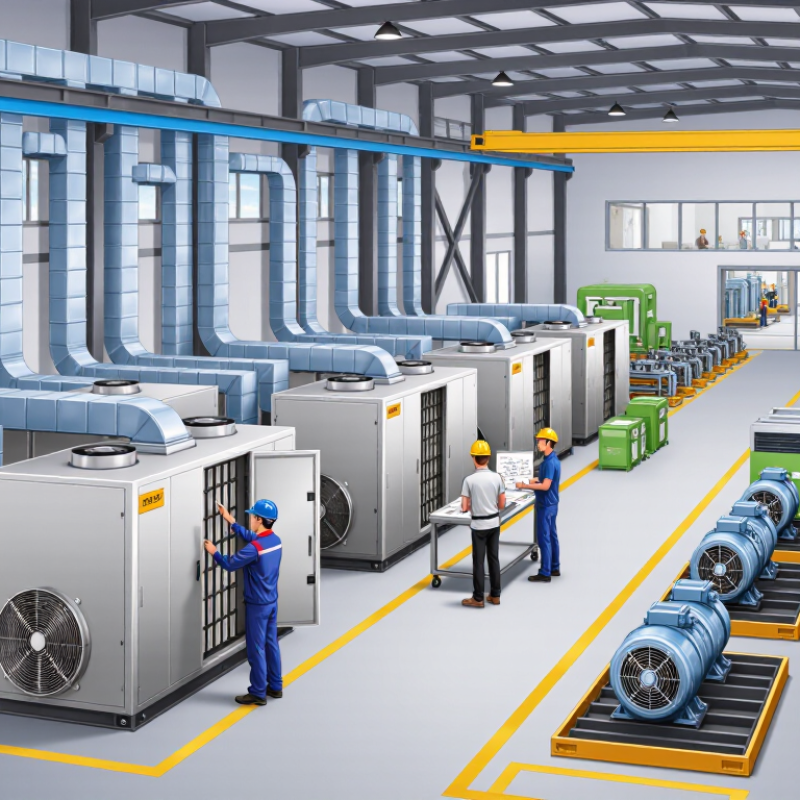
China Top 10 Airflow HVAC Manufacturers for Global Buyers

What Airflow HVAC Systems Are and Why Global Buyers Choose China

Airflow HVAC systems control how clean, conditioned air moves through buildings. They include air handling units, fans, ducts, filters, dampers, sensors, and heat recovery devices. Airflow is the hidden work. Poor circulation creates hot corners, noise, pressure loss, and wasted energy. ASHRAE Standard 62.1 links ventilation design with acceptable indoor air quality, making airflow performance a technical and health-related concern.

Global buyers increasingly source these systems from China because its manufacturing base supports high-volume production, component integration, and flexible customization. Chinese suppliers can often coordinate fans, coils, controls, and sheet-metal assemblies within one supply chain. This can shorten procurement time and reduce coordination problems. The International Energy Agency reported that space cooling could more than triple by 2050 from 2016 levels. The IEA and UNEP also reported that buildings consume about 30% of global final energy and create roughly 26% of energy-related emissions. These figures make efficiency more than a purchasing preference. China is not automatically the best choice, though. Factory capability, testing discipline, documentation, and after-sales support still vary considerably.

Tips: Ask for fan curves, sound data, filtration ratings, leakage results, and control sequences. Confirm testing against applicable local standards before signing. Request a sample inspection. A low quotation may hide installation costs, weak insulation, or difficult replacement parts. Buyers should compare lifecycle energy use, not only the equipment price. Some specifications look impressive on paper but need independent verification.

China Top 10 Airflow HVAC Manufacturers for Global Buyers

Typical Airflow Capacity of HVAC System Types

Airflow HVAC systems move, filter, heat, cool, or distribute air through residential, commercial, industrial, and data-center spaces. The chart shows representative design airflow values for commonly specified system types, measured in cubic metres per hour (m³/h).

Values are indicative engineering reference points based on commonly published equipment capacity ranges; actual airflow depends on building load, static pressure, filtration, climate, and project specifications. Global buyers often source from China because of broad product selection, scalable manufacturing, component availability, and export-oriented supply chains.

How the Top 10 Chinese Airflow HVAC Manufacturers Are Selected

Selecting China’s top 10 airflow HVAC manufacturers requires more than checking export volume. The method combines engineering capability, factory evidence, product testing, and service performance. The IEA’s Future of Cooling report states that cooling already uses about 10% of global electricity. It also warns that cooling demand could more than triple by 2050. Efficiency must therefore remain a central selection criterion.

Each manufacturer should provide verifiable test records, stable airflow data, and clear energy-efficiency ratings. Reviewers should examine production lines, quality-control checkpoints, warranty procedures, and spare-parts access. Compliance with relevant ISO, IEC, and regional safety requirements strengthens reliability. The Global Cooling Watch 2023 report estimates that efficient equipment and improved building design could reduce cooling emissions by 68% by 2050. That figure supports careful evaluation of inverter systems, heat exchangers, controls, and refrigerant choices.

Export experience matters, but it can mislead. A large shipment does not prove consistent quality. Buyers should compare failure rates, delivery records, technical documentation, and customer response times. Factory audits and sample testing add practical evidence. Still, no ranking method is perfect. A polished showroom may hide weak after-sales support. For this reason, the final 10 should reflect documented performance, engineering depth, customization ability, and transparent communication across different markets.

Profiles of China’s Top 10 Airflow HVAC Manufacturers

China’s Top 10 Airflow HVAC Manufacturers for Global Buyers

The ten profiles reflect China’s expanding role in commercial ventilation and air-conditioning supply. The International Energy Agency reports that space-cooling energy demand could triple by 2050 without stronger efficiency measures. This makes airflow design, not only cooling capacity, a serious purchasing concern.

These manufacturers typically serve factories, hospitals, hotels, offices, and data facilities. Their profiles should be judged through measurable details: air volume, external static pressure, heat-recovery efficiency, noise levels, and filter performance. Several offer EC fans, variable-speed drives, fresh-air units, and heat-recovery systems. Some also provide airflow simulation and factory acceptance testing. Useful evidence includes ISO 9001 systems, CE or regional compliance, independent laboratory reports, and traceable test records. Certificates alone are not enough.

The strongest profiles show practical export experience. They explain how units perform at 35°C outdoor temperatures, dusty sites, or unstable voltage conditions. That detail matters. The China Energy Conservation Association has repeatedly linked building energy savings with efficient equipment and operating controls. Buyers should also examine spare-parts availability, response times, packaging quality, and commissioning support. A weakness remains common: published data may use ideal laboratory conditions. Real buildings are less cooperative. Careful buyers should request duty-point curves, sound measurements, wiring diagrams, and reference projects before approving production.

China Top 10 Airflow HVAC Manufacturers for Global Buyers - Profiles of China’s Top 10 Airflow HVAC Manufacturers
Rank Manufacturer Profile Core HVAC Product Focus Typical Airflow Capacity Typical Applications Efficiency and Control Options Common Compliance Documents Export and Customization Capability
1 Manufacturer Profile 01 Air handling units, fresh-air units, plug fans, and heat-recovery ventilation systems Approximately 1,000–100,000 m³/h Commercial buildings, hospitals, airports, and industrial facilities EC or variable-speed fans, inverter control, BMS communication, and multi-stage filtration ISO 9001 quality systems; CE documentation for applicable European-market products OEM enclosure dimensions, coil selection, controls, voltage, and finish options
2 Manufacturer Profile 02 Centrifugal fans, axial fans, roof exhausters, and smoke-extraction fans Approximately 500–250,000 m³/h Factories, warehouses, car parks, kitchens, and tunnel ventilation Backward-curved impellers, direct-drive motors, variable-frequency drives, and speed regulation Performance test reports, motor data sheets, ISO 9001, and product safety declarations where required Impeller materials, motor class, mounting position, acoustic treatment, and duty-point matching
3 Manufacturer Profile 03 Commercial ventilation units, duct fans, filtration modules, and air-distribution equipment Approximately 300–60,000 m³/h Offices, retail spaces, schools, hotels, and residential developments High-efficiency motors, CO₂ sensors, timer control, demand-controlled ventilation, and washable filters ISO 9001, CE technical files where applicable, electrical test reports, and material declarations Duct size, air-volume configuration, control panel language, filter grade, and packaging customization
4 Manufacturer Profile 04 Heat-recovery ventilators, energy-recovery units, and residential fresh-air systems Approximately 100–20,000 m³/h Apartments, villas, offices, laboratories, and energy-efficient buildings Counter-flow heat exchangers, EC motors, bypass operation, frost protection, and remote monitoring Airflow and heat-recovery test data, ISO 9001, CE documents, and electrical safety reports Heat-exchanger material, casing insulation, sensors, communication protocol, and regional power supply
5 Manufacturer Profile 05 Industrial air curtains, ventilation fans, air-handling accessories, and air-distribution systems Approximately 800–40,000 m³/h Factories, loading bays, supermarkets, workshops, and logistics centers Multi-speed motors, adjustable louvers, electronic controllers, and optional heating sections ISO 9001, electrical test reports, CE declarations where applicable, and inspection records Opening width, installation height, heater type, casing color, voltage, and mounting accessories
6 Manufacturer Profile 06 Explosion-protected fans, corrosion-resistant fans, and process ventilation equipment Approximately 300–100,000 m³/h Chemical plants, battery facilities, wastewater treatment, and hazardous-area installations Spark-resistant construction, stainless-steel options, insulated motors, and application-specific controls Material certificates, motor certificates, factory test reports, ISO 9001, and hazardous-area documents when applicable Material grade, protective coating, hazardous-area classification, flange size, and duty-point engineering
7 Manufacturer Profile 07 Packaged air-handling units, rooftop ventilation systems, and modular HVAC sections Approximately 2,000–150,000 m³/h Shopping centers, data rooms, production plants, and large public buildings Variable-speed drives, cooling and heating coils, economizer control, and centralized BMS integration ISO 9001, coil and fan performance data, electrical test records, and project-specific inspection documents Modular layout, coil capacity, filtration stages, access-panel configuration, and control-system integration
8 Manufacturer Profile 08 Low-noise fans, acoustic ventilation units, clean-air equipment, and laboratory air systems Approximately 200–35,000 m³/h Hospitals, laboratories, recording spaces, offices, and precision manufacturing areas Acoustic lining, vibration isolation, HEPA filtration options, variable airflow, and pressure monitoring Filter certificates, airflow test reports, noise data, ISO 9001, and cleanroom documentation where required Noise target, filtration level, pressure class, casing construction, monitoring points, and control interface
9 Manufacturer Profile 09 Compact fan-coil ventilation units, ceiling-mounted systems, and concealed air-conditioning modules Approximately 300–12,000 m³/h Hotels, apartments, offices, clinics, and light commercial properties EC fan motors, three-speed controls, thermostats, condensate protection, and optional smart controls Electrical safety reports, airflow data, ISO 9001, CE documents where applicable, and installation manuals Ceiling dimensions, water or refrigerant coil selection, control voltage, casing finish, and private-label packaging
10 Manufacturer Profile 10 Agricultural ventilation fans, livestock air-exchange systems, evaporative cooling, and exhaust equipment Approximately 5,000–90,000 m³/h Greenhouses, poultry houses, livestock buildings, agricultural warehouses, and drying rooms High-volume low-speed airflow, shutters, thermostatic control, belt or direct drive, and corrosion-resistant finishes Motor documentation, airflow test data, ISO 9001 where maintained, electrical reports, and material specifications Fan diameter, shutter type, frame material, motor voltage, climate-control package, and container-load planning

Note: Airflow figures are representative product-range values commonly used for buyer screening. Final capacity, efficiency, certification, and compliance status should be verified against the selected model and project requirements.

How to Compare Products, Certifications, Capacity, and Export Services

For global buyers comparing China’s top ten airflow HVAC manufacturers, product data should come before sales promises. The IEA’s The Future of Cooling report states that cooling demand could more than triple by 2050. Compare airflow, static pressure, noise, efficiency, refrigerant type, and operating temperature. Ask for test conditions, not only catalogue values. A fan rated at 10,000 m³/h may perform differently after filters, ducts, and heat exchangers are installed. Request sample reports based on recognized standards, with serial numbers and test dates.

Certifications need careful checking. ISO 9001 supports process control, but it does not prove product performance. Confirm whether CE, RoHS, UL, or other approvals cover the exact model and destination market. Verify certificate scope, issuing body, and expiry date. UNEP’s 2022 Cooling Emissions and Policy Synthesis Report highlights the importance of efficient cooling and lower-impact refrigerants. Therefore, buyers should compare seasonal efficiency, leakage controls, and serviceability, not just purchase price. Small details matter.

Production capacity also needs evidence. Ask for annual output, monthly peak capacity, factory area, testing equipment, and current utilization. Export service should include packaging drawings, multilingual manuals, spare-parts plans, inspection support, and clear Incoterms. I would also check lead times during summer. They often change. A factory audit, video inspection, and reference project can reveal gaps between declared capacity and real delivery performance. No comparison is perfect; even a strong report may miss after-sales response in a distant market.

Key Steps for Global Buyers to Choose the Right Manufacturer

China Top 10 Airflow HVAC Manufacturers for Global Buyers

Key Steps for Global Buyers to Choose the Right Manufacturer

Selecting an airflow HVAC manufacturer requires more than comparing factory prices. The International Energy Agency reports that space-cooling demand could more than triple by 2050. Efficiency, durability, and service capacity now affect long-term operating costs. Request verified airflow curves, noise readings, energy data, and material specifications. A reliable supplier should explain testing conditions, not only show attractive numbers.

Check production evidence carefully. Review quality certificates, factory audit records, sample inspection results, and delivery performance from comparable projects. Confirm whether the manufacturer can produce units for your voltage, climate, duct layout, and installation space. Ask for spare-parts schedules and remote troubleshooting procedures. Small details matter. A missing sensor can delay commissioning for weeks.

Tips: Compare total cost of ownership, not the purchase price. Use independent inspection before shipment. Ask for a pilot order with clear acceptance criteria. The ASHRAE Handbook recommends evaluating system performance under actual operating conditions, yet many buyers still rely on laboratory figures alone. That is a weakness worth challenging. A low quote may hide higher fan energy, difficult maintenance, or uncertain warranty support. Leave room for honest doubt, especially when sales claims seem unusually perfect.